
Seasonal and temporal impacts of temperature-humidity index on grazing, rumination and idling behavioural patterns in grazing dairy cows
Muhammad W Iqbal1,2 Ina Draganova1 Patrick CH Morel1 Steve T. Morris1
- School of Agriculture and Environment, Massey University, Palmerston North, New Zealand.
- Animal Bioscience Research Department, Animal & Grassland Research & Innovation Centre, Grange, Dunsany, County Meath, Ireland.
Article Information
- Date Received: 28/04/2026
- Date Revised: 30/05/2026
- Date Accepted: 03/06/2026
- Date Published Online: 27/06/2026
Copyright: © 2026 The Authors. Published by MARCIAS AUSTRALIA, 32 Champion Drive, Rosslea, Queensland 4812, Australia. This is an open access publication under the terms and conditions of the Creative Commons Attribution (CC BY) license (https://creativecommons.org/licenses/by/4.0/).
Citation: Iqbal MW, Draganova I, Morel P, Morris ST (2026). Seasonal and temporal impacts of temperature-humidity index on grazing, rumination and idling behavioural patterns in grazing dairy cows. Aust J Agric Vet Anim Sci (AJAVAS), 2(2), 100020. https://doi.org/10.64902/ajavas.2026.100020
Abstract
This study examined how grazing, rumination and idling behaviour patterns varied in a pasture-based dairy system across different seasons, depending on the time of day, and the Temperature-Humidity Index (THI). Three visual observation trials (OT) were conducted in spring, summer, and autumn using 36 lactating, pasture-grazing Jersey, Holstein-Friesian and Holstein-Friesian x Jersey crossbred dairy cows in different lactations (12 cows per OT). The study was performed at Dairy Unit 1 of Massey University, New Zealand. A continuous recording method was used to collect grazing (min/h) and rumination (min/h) behaviours data; Idling behaviour was considered when animals were neither grazing nor ruminating. A total of 72 hours of data was collected per OT, with 9 days of visual observation within each OT, and 8 hours (09:00-17:00) of observation per day. Four animals were observed at a time for three consecutive days with a new set of four animals in the next three days as the cycle repeats. A repeated measures mixed model was used to analyse behaviour variations affected by OT, day within OT, THI, and their interactions. Grazing time was significantly affected by the hour of the day and THI, and cows grazed less during periods of high THI. Rumination time was mainly affected by the hour of the day and its interaction with THI, with a shift in rumination towards the low THI hours. Idling time was significantly affected by the day of OT and hour of the day, and their interactions with THI. With a rise in THI, the duration of idling behaviour increased. These behavioural adaptations highlight the importance of behaviour-based management practices to reduce the adverse effects of heat stress on dairy cows to improve their well-being and productivity.
Keywords
Grazing; rumination; idling; temperature humidity index; grazing dairy system
Highlights
- High THI reduced grazing and rumination time in dairy cows
- Idling time increased with a rise in THI, indicating a heat stress response
- Behavioural shifts highlight the need for heat mitigation in grazing systems
1.0 Introduction
Pasture based dairy cows express grazing and rumination as two major behavioural activities. Over a 24-hour period, the estimated average time budgets for grazing and rumination are approximately 12 and 8 hours, respectively (Iqbal, 2023). Grazing directly affects nutrient intake (Dillon, 2007; Boval and Sauvant 2021 et al., 2018), while rumination impacts the process of digestion (Weckerly, 2013; Zhang et al., 2023). To optimise management practices and ensure the well-being of animals, typical behavioural patterns, time budgets, and impacting factors related to the animals themselves, environment and management practices need to be fully understood. For example, climatic conditions have a major influence on the grazing and rumination behaviours of dairy cows (Iqbal et al., 2022; Paixão et al., 2026). Temperature-Humidity Index (THI), a combination of air temperature and relative humidity, is a significant environmental factor for evaluating thermal comfort (Morales-Piñeyrúa et al., 2022; Arias & Mader, 2023). The THI threshold in dairy management is an indicator of heat stress in grazing animals (West, 2003; Morales-Piñeyrúa et al., 2022). The THI thresholds for heat stress in Holstein-Friesian, Jersey and crossbred cows, are 68, 75, and 69, respectively (Bryant et al., 2007; Pinto et al., 2020).
Pasture based dairy cows express grazing and rumination as two major behavioural activities. Over a 24-hour period, the estimated average time budgets for grazing and rumination are approximately 12 and 8 hours, respectively (Iqbal, 2023). Grazing directly affects nutrient intake (Dillon, 2007; Boval and Sauvant 2021, 2018), while rumination impacts the process of digestion (Weckerly, 2013; Zhang et al., 2023). To optimise management practices and ensure the well-being of animals, typical behavioural patterns, time budgets, and impacting factors related to the animals themselves, environment and management practices need to be fully understood. For example, climatic conditions have a major influence on the grazing and rumination behaviours of dairy cows (Iqbal et al., 2022; Paixão et al., 2026). Temperature-Humidity Index (THI), a combination of air temperature and relative humidity, is a significant environmental factor for evaluating thermal comfort (Morales-Piñeyrúa et al., 2022; Arias & Mader, 2023). The THI threshold in dairy management is an indicator of heat stress in grazing animals (West, 2003; Morales-Piñeyrúa et al., 2022). The THI thresholds for heat stress in Holstein-Friesian, Jersey and crossbred cows, are 68, 75, and 69, respectively (Bryant et al., 2007; Pinto et al., 2020).
Elevated levels of THI beyond an acceptable threshold indicate that animals may be under heat stress, potentially resulting in reduced feed intake, decrease in milk yield, and varied behaviour patterns (Zimbelman et al., 2009; Collier et al., 2006; Stone et al., 2017; Valdivia-Cruz et al., 2021). Heat stress due to high THI can lead to shorter grazing and rumination (Soriani et al., 2013), and longer standing time budgets, as cows attempt to dissipate heat load (Kendall et al., 2006; Leslie & Petersson-Wolfe, 2012; Polsky & Von Keyserlingk, 2017). Therefore, behavioural expressions can be used as indicators of heat stress in dairy cows. Similarly, idling, defined as any behaviour that is neither grazing nor rumination (Gibb et al., 1999; Iqbal, 2023), is also influenced by thermal stress in times of high THI levels. Heat-stressed cows are often found spending increased time on idling behaviour (Leliveld et al., 2025) to reduce metabolic heat load and cope with uncomfortable thermal conditions (Cook et al., 2007; Leslie & Petersson-Wolfe, 2012; Leliveld et al., 2025). This shift in idling behaviour often affects other behavioural time budgets as well. For example, it results in reducing the time left for grazing and rumination activities which indirectly impacts animal health and productivity due to their links with the animal’s nutritional demands (Evers et al., 2014; Nakajima & Yayota, 2019; Iqbal et al., 2023; Yu et al., 2024).
Previous research in dairy cows assessed variations in physiological responses such as heart and respiratory rates, and milk yield (Bernabucci et al., 2014) against varying THI. However, there is a dearth of published data on behavioural patterns for grazing, rumination, and idling activities, and their adaptations during times of varying THI levels in pasture-based New Zealand dairy cows. Also, studies focusing on seasonal and temporal dynamics, and hourly behavioural partitioning in New Zealand’s pasture-based system are currently either scarce or non-existent. This critical gap in research highlights the need for a thorough analysis of how variations in THI affect grazing, rumination, and idling activities across different seasons. Understanding these behavioural adaptations will help to improve animal welfare and support a sustainable and long-term productivity in dairy farming. Therefore, this study aimed to bridge this identified research gap by evaluating the effect of THI levels on grazing, rumination, and idling behavioural patterns in pasture based grazing dairy cows. By analysing behaviours under varying THI levels, the objective was to provide valuable insights that can drive better management practices for dairy production. Specifically, it was hypothesised that higher THI levels affect normal grazing, rumination, and idling behaviour patterns and reflect the cow’s adaptation mechanism in mitigating heat stress.
2.0 Materials and methods
The study was conducted at Dairy Unit 1, Massey University, Palmerston North, New Zealand (Latitude: −41.3009, Longitude: 174.7720). Dairy Unit 1 is a pasture-based grazing dairy farm operating under spring calving, once-a-day milking, and a rotational grazing scheme. The local temperate climate is classified into four seasons; comprising spring (September to November), summer (December to February), autumn (March to May), and winter (June to August).
2.1 Study animals and experimental conditions
Spring-calved lactating dairy cows (n = 36) were used in this study. The cows were classified into three breeds: Jersey (JE), Holstein-Friesian (HFR), and Holstein-Friesian x Jersey crossbreds (XB). The cows were in first, second, and third lactations with an average daily milk yield of 16.3 ± 4.4 litres, mean body weight of 465 ± 54 kg, and body condition score of 4.6 ± 0.4. The cows rotationally grazed across different paddocks on ryegrass (Lolium perenne), red clover (Trifolium pratense), and white clover (Trifolium repens) pastures with a dry matter intake of ~20 kg/animal/day, and were milked once daily from 6:00 to 8:00 a.m. All cows had ad libitum access to drinking water.
2.2 Behaviour observation protocol
Selected cows were visually observed for behavioural activities, including grazing (min/h) and rumination (min/h), as defined by Merenda et al., (2019). Grazing was identified by the cow’s active search for grass while walking with its head lowered, including pasture biting and chewing. Rumination was said to occur when the cow regurgitated the chewed bolus for re-mastication and concluded when the bolus was swallowed (Wadhwani et al., 2023). Idling behaviour occurred when the cow was neither grazing nor ruminating (Gibb et al., 1999). The cows were visually observed by a single trained observer using a continuous behaviour recording protocol from ~30 meters (Stakelum & Dillon, 2003). The cows were monitored for behavioural activities using synchronised stopwatches. One stopwatch per cow recorded the duration of grazing and rumination activities in minutes per hour. At the onset of each behavioural activity, the corresponding stopwatch was started to track the time spent on that activity. The timer continued to run until that specific activity was stopped or when the cow switched to a different behavioural activity. If a cow paused the activity or engaged in other behaviours such as drinking water, lying or standing idle, the stopwatch was paused accordingly. At the end of each hour, all the stopwatches were reset and restarted for the subsequent hour. The times spent grazing and ruminating were recorded separately for each cow every hour on each observation day within each observation trial (OT).
2.3 Study design
Three OTs were performed at various times over the year to cover the environmental seasons (spring, summer, autumn) as well as the lactation period in the dairy system (Table 1); there were no observations recorded for winter as animals were dried off. The total observation time consisted of 36 days, with 9 days for each observation trial. Each observation day consisted of a continuous observation period of 8 hours that spanned from 9:00 to 17:00 hrs. to cover the maximum daylight hours. There were 36 cows used for behaviour observation; For each of the OT, different animals were used; however, the observations remained balanced across breed and lactation groups. Also, animals differed in terms of their lactation stage (as indicated by their days in milk, the number of days since calving) in each OT. From the cohort of 36 cows, 12 cows were observed during each OT. On each observation day, a set of four cows was observed at a time for three consecutive days, with a different set of four cows observed in the subsequent three days, and so forth. The animals under observation were the only animals in the grazing paddock with the same observer throughout the observation period (Benaissa et al., 2019). The behaviour observation protocol and experimental design are further elaborated in Figure 1.
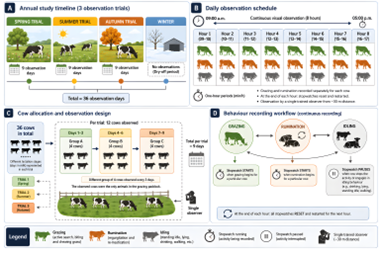
Fig 1. Overview of the behaviour observation protocol and experimental design. The image was designed using an Agentive AI-based tool.
Table 1. Visual observation trial times and lengths of grazing and rumination behaviours of grazing dairy cows in different seasons
| Observation Trial | Observation Days | Observation Hours | Season / Month | Animals |
|---|---|---|---|---|
| 1 | 9 | 72 (8 Hours/Day) | Spring (October) | 12 |
| 2 | 9 | 72 (8 Hours/Day) | Summer (December) | 12 |
| 3 | 9 | 72 (8 Hours/Day) | Autumn (March) | 12 |
| Total | 27 | 216 | 3 Seasons | 36 |
Each observation trial comprised 9 days and 8 hours within each day (9 × 8 = 72 hours) of data collected per observation trial using 12 animals (n = 864 observation hours)
2.4. Data preparation and statistical analysis
Data comprising eight hundred and sixty four observations (36 cows × 24 observation hours per cow) were collected over three observation trials during the study period. The recorded data compiled as total minutes spent grazing, ruminating, or idling within each hour (min/h), were manually entered into a Microsoft Excel spreadsheet (Microsoft Excel, version 2016). Per-hour idling time (min/h) was calculated by subtracting the minutes spent grazing and ruminating from 60 (total minutes in an hour). Hourly temperature and humidity data were extracted from the National Institute of Water and Atmospheric Research (NIWA, 2020). The Temperature Humidity Index (THI) was calculated using the following equation:
THI = 0.8T + [RH × (T – 14.4)] + 46.4
where T is the hourly maximum temperature (˚C), and RH is the percentage humidity for that hour divided by 100 (Davis et al., 2003).
A repeated measures mixed model procedure using PROC MIXED was performed in SAS (version 9.4, SAS Institute Inc., Cary, NC) to analyse the repeated hourly behavioural observations. The model was fitted with observation trial (OT), breed (three levels), day within the OT, hour of the day, individual cow within the OT and breed, and Temperature Humidity Index (THI). The model investigated differences in grazing (min/h), rumination (min/h), and idling (min/h) behaviours (Jochims et al., 2020; Iqbal et al, 2023). Breed of the cow, OT, and their interaction were the main fixed effects in the model. Individual cows within the OT and breed were used as random effects. The day within the trial and the hour of the day were added as repeated measures on the subject cow. The Temperature Humidity Index for each observation hour was added as a continuous covariate in the model, along with its interactions with other factors. To determine the hourly behaviour patterns, the data were summarised as the least square means of minutes utilised for grazing, rumination, and idling for the individual hours on each observation day within each OT. To visualise grazing, rumination and idling patterns, least-square means with the standard errors of the means were plotted in a line chart using Microsoft Excel (version 2024). To further determine the magnitude of the relative effect size of various study factors and their interactions on the behavioural variables, variance partitioning was used, considering Type I sum of squares values. The significance and effect size of the individual study factors were assessed separately.
3.0 Results
Grazing time was strongly affected by the day of OT, hour of the day, temperature-humidity index (THI), and their interactions (Table 2). Rumination time was mainly affected by the day of OT and the hour of the day, and their interactions with THI. Idling time was influenced by day of OT, hour of the day, and THI, and strong time-temperature interactions.
Least square means and standard errors of grazing, rumination, and idling times for observation trials 1, 2, and 3 during the observation period (from 09:00 to 17:00) are shown in Table 3. Grazing, rumination, and idling behaviour patterns, based on least square mean values for observation trials 1, 2, and 3 during the observation time (from 09:00 to 17:00), along with THI, are shown in Figure 2. The THI steadily rose across trials and throughout the day, and peaked at the value of 71 between 15:00 and 16:00 in OT-3, a period marked with reduced grazing and increased idling. Grazing was the main activity in the morning (10:00), it declined around midday (12:00–14:00), with the lowest value observed at 1:00; this overlapped with the peak THI levels. In contrast, rumination remained relatively low in the morning but surged in the afternoon. Although THI had no significant effect, rumination tended to drop when THI was highest, particularly in OT-3, where rumination fell to zero between 16:00 and 17:00. Idling activity increased around midday and early afternoon, particularly in Trials 2 and 3.
Table 2. Significance of OT, breed, day within observation trial, hour of the day, and temperature humidity index for grazing rumination and idling behaviour patterns (min/h).
| Effect | P Value | ||
|---|---|---|---|
| Grazing time | Rumination time | Idling time | |
| Observation Trial (OT) | 0.0862 | 0.751 | 0.0936 |
| Breed | 0.7984 | 0.2632 | 0.2637 |
| Day of OT | <.0001 | 0.0481 | <.0001 |
| Hour of the day | <.0001 | 0.0054 | <.0001 |
| Temperature Humidity Index (THI) | 0.0003 | 0.5585 | <.0001 |
| OT*Breed | 0.6483 | 0.5402 | 0.4037 |
| Breed*Day of OT | 0.9616 | 0.9937 | 0.9267 |
| Breed*Hour of the day | 0.9852 | 0.8103 | 0.7986 |
| THI*OT | 0.0459 | 0.7579 | 0.0519 |
| THI*Breed | 0.776 | 0.2205 | 0.2146 |
| THI*Day of OT | <.0001 | 0.0562 | <.0001 |
| THI*Hour of the day | <.0001 | 0.0223 | <.0001 |
Grazing, rumination and idling behaviours were measured in min/h from 9:00 to 17:00. * Indicates statistical interaction between factors
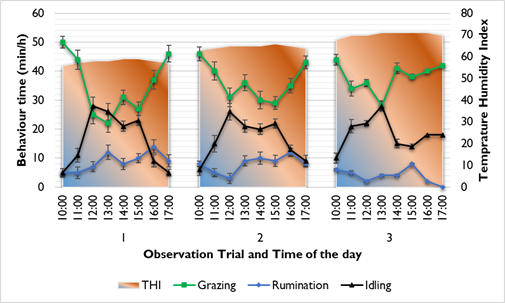
Figure 2. Grazing, rumination and idling hourly patterns in observation trials 1, 2, and 3. THI is the Temperature Humidity Index. 10:00 indicates the period between 9:00-10:00, 11:00 is the period between 10:00-11:00, etc.
Table 3. Least square means (LSM) and Standard Errors (SE) for grazing time (min/h), rumination time(min/h), idling time (min/h) and temperature humidity index (THI) value for individual observation hours (9:00 to 17:00) during trials 1, 2, and 3.
| Observation Trial | Time | Grazing time | Rumination time | Idling time | THI | |||
|---|---|---|---|---|---|---|---|---|
| LSM | SE | LSM | SE | LSM | SE | |||
| 1 | 10:00 | 50.0 | 2.02 | 5.0 | 1.42 | 5.0 | 1.47 | 56 |
| 11:00 | 44.0 | 3.28 | 5.0 | 2.03 | 11.0 | 2.41 | 57 | |
| 12:00 | 25.0 | 3.20 | 7.0 | 1.73 | 28.0 | 2.97 | 58 | |
| 13:00 | 22.0 | 3.06 | 12.0 | 2.53 | 26.0 | 2.79 | 58 | |
| 14:00 | 31.0 | 2.51 | 8.0 | 1.91 | 21.0 | 1.78 | 59 | |
| 15:00 | 27.0 | 2.34 | 10.0 | 1.61 | 23.0 | 1.74 | 59 | |
| 16:00 | 37.0 | 3.27 | 14.0 | 2.27 | 9.0 | 2.13 | 58 | |
| 17:00 | 46.0 | 2.87 | 9.0 | 2.10 | 5.0 | 1.12 | 57 | |
| 2 | 10:00 | 46.0 | 1.47 | 8.0 | 0.30 | 6.0 | 1.40 | 63 |
| 11:00 | 40.0 | 2.35 | 5.0 | 0.91 | 15.0 | 1.97 | 64 | |
| 12:00 | 31.0 | 3.12 | 3.0 | 1.37 | 26.0 | 2.85 | 65 | |
| 13:00 | 36.0 | 3.25 | 9.0 | 1.72 | 21.0 | 2.80 | 65 | |
| 14:00 | 30.0 | 2.78 | 10.0 | 1.72 | 20.0 | 2.09 | 65 | |
| 15:00 | 29.0 | 3.04 | 9.0 | 2.18 | 22.0 | 1.90 | 66 | |
| 16:00 | 35.0 | 2.23 | 12.0 | 1.92 | 13.0 | 1.58 | 65 | |
| 17:00 | 43.0 | 2.50 | 8.0 | 1.46 | 9.0 | 1.42 | 64 | |
| 3 | 10:00 | 44.0 | 2.22 | 6.0 | 0.95 | 10.0 | 2.00 | 68 |
| 11:00 | 34.0 | 1.20 | 5.0 | 0.21 | 21.0 | 1.04 | 70 | |
| 12:00 | 36.0 | 1.83 | 2.0 | 0.34 | 22.0 | 1.72 | 70 | |
| 13:00 | 28.0 | 2.55 | 4.0 | 0.57 | 28.0 | 2.27 | 71 | |
| 14:00 | 41.0 | 1.18 | 4.0 | 0.42 | 15.0 | 0.98 | 71 | |
| 15:00 | 38.0 | 1.69 | 8.0 | 0.40 | 14.0 | 1.58 | 71 | |
| 16:00 | 40.0 | 1.76 | 2.0 | 0.39 | 18.0 | 1.52 | 71 | |
| 17:00 | 42.0 | 0.92 | 0.0 | 0.17 | 18.0 | 0.84 | 70 | |
10:00 indicates the period between 9:00-10:00, 11:00 is the period between 10:00-11:00, etc.
Table 4 summarises the variance (%) in grazing, rumination, and idling behaviours explained by different study factors and their interaction included in the model. The total variance explained by all the fixed effects and their interactions in grazing, rumination and idling behaviour patterns (hourly) were 72.3%, 57.1%, and 68.4%, respectively. For grazing, the most influential factors were the hour of the day (17.92%), OT (16.84%), and the interaction of THI with hour of the day (12.99%). For rumination, OT (11.60%), day of OT (7.04%), and the interaction between THI and hour of the day (7.82%) were the primary contributors. For idling, the hour of the day (20.74%) explained most of the variance, followed by OT (8.42%) and the interaction between hour of the day and THI (12.93%). Breed and interactions involving breed explained very little variance for the study behaviours.
Table 4: Variance in grazing rumination and idling behaviours (min/h) explained by observation trial, breed, day within observation trial, hour of the day, temperature humidity index and interactions.
| Effect | Variance explained (%) | ||
|---|---|---|---|
| Grazing time | Rumination time | Idling time | |
| Observation Trial (OT) | 16.8 | 11.6 | 8.4 |
| Breed | 1.0 | 1.3 | 4.6 |
| Day of OT | 5.7 | 7.0 | 3.9 |
| Hour of the day | 17.9 | 9.5 | 20.7 |
| Temperature Humidity Index (THI) | 0.0 | 0.2 | 0.0 |
| Cow (OP*Breed) | 4.8 | 4.0 | 4.0 |
| OT*Breed | 0.3 | 0.8 | 0.3 |
| Breed*Day of OT | 1.3 | 1.3 | 1.4 |
| Breed*Hour of the day | 5.2 | 9.7 | 7.0 |
| THI*OT | 0.8 | 0.4 | 0.7 |
| THI*Breed | 0.1 | 0.3 | 0.0 |
| THI*Day of OT | 5.4 | 3.1 | 4.5 |
| THI*Hour of the day | 13.0 | 7.8 | 12.9 |
| Total variance explained (%) | 72.3 | 57.1 | 68.4 |
* Indicates interactions
4.0 Discussion
Grazing and rumination behaviours are indicators of nutritional intake and digestion of feed as well as critical measures of animal welfare, health, and production in dairy cows (Llonch et al., 2018; Petrovski et al., 2022). The current study provides an understanding of how temporal (hour of the day and day of the season), along with other environmental factors (e.g., THI), influence grazing, rumination, and idling behavioural patterns over the day in grazing dairy cows. It is worth stating upfront that since the OTs were conducted across different seasons and lactation stages of the study animals, season and lactation stage may have confounded some of the findings herein. THI in interaction with hour of the day and day of OT, significantly influenced grazing and idling activity patterns of dairy cows in tandem with the findings of Pinto et al., (2020). Feed intake and grazing behaviour are adversely affected by high ambient temperatures and humidity due to animals’ behavioural adaptations and mitigation attempts to reduce heat stress (Kendall et al., 2006; Yu et al., 2024). Grazing is a continuous walking activity, and the rumination process involves significant metabolic activities in the rumen leading to heat production and increased internal body temperature (Pontiggia et al., 2024). The increase in idling during peak THI hours (13:00–16:00) points to the thermoregulatory response, given that cows prioritise lowering metabolic heat output over foraging (Dikmen & Hansen, 2009; Yu et al., 2024). The observation in OT-3 where rumination remained relatively low in the morning, increased in the afternoon, and decreased when THI surpassed 70, aligns with previous findings (Gaughan et al., 2010; Talukder et al., 2024; Yu et al., 2024). Thid Rumination cessation during high THI further suggests that high temperature and humidity could interfere with regular digestion processes due to physiological changes involved in coping with heat stress. These findings highlight the necessity of efficient strategies like the inclusion of shades in grazing paddocks and dietary adjustments to maintain optimal dairy cattle performance and welfare.
The observation in this study where grazing behaviour was affected by day of OT, hour of the day, and THI, and their interactions is consistent with other studies that found that ambient temperature and humidity affect motivation to graze (Talukder et al., 2024). To avoid heat stress, pasture-based cows spend less time grazing during the hottest parts of the day and conserve energy, and to optimise their thermal comfort and feed intake, they tend to adjust their grazing activity by avoiding the peak heat period of the day (Iqbal, 2023; Talukder et al., 2024). This further supports the assertion that THI plays a key role in modulating grazing activity, and animals adapt their activity accordingly to balance energy intake and thermal comfort. This information can be potentially helpful in managing feed and water intakes for grazing cows and drive the provision of shade during the summer season when THI is high. THI, as a thermal environmental factor along with the hour of the day, had a collective influence on grazing activity and this is in line with previous findings (Mader, 2006; Leliveld et al., 2022), where animals under high THI reduced grazing activity and sought shelter to minimise heat exposure (Schütz et al., 2009; Talukder et al., 2024).
Rumination behaviour was predominantly affected by the hour of the day and its interaction with THI, and day within OT. To optimise their physiological comfort, cattle adjust their rumination activity when THI is low, because rumination is linked to daily rhythms and short-term environmental changes (Beauchemin et al., 1997; Schirmann et al., 2012; Akdag et al., 2018). This further indicates that rumination activity is predominantly performed during cooler (low THI) periods (Schirmann et al., 2012). Therefore, there is an increase in rumination activity during nocturnal hours; this allows cows to improve the digestion process in thermally favourable conditions. Our finding in the current study where idling behaviour was significantly influenced by the hour of the day, its interaction with THI, day of OT, and THI, suggests that idling may serve as a behavioural response to thermal stress. This agrees with other studies demonstrating that cows may increase idling time during periods of high heat load as a strategy to minimise heat production and physical exertion (Brown-Brandl et al., 2006; Polsky & Von Keyserlingk, 2017). It also aligns with previous research indicating that idling or resting behaviour increases during high THI periods, allowing animals to reduce metabolic heat load and conserve water by minimising activity (Mader, 2006; Leliveld et al., 2025;). The strong interaction between THI and the hour of the day suggests that idling behaviour is dynamic and responsive to immediate environmental conditions, as animals seek to alleviate heat stress. The substantial variance explained by hour-specific parameters suggests idling as a behavioural response of animals to hourly variations in thermal conditions. This is in line with previous findings by Leliveld et al., (2025) and Brown-Brandl et al., (2006) who reported that when heat load is high, cattle tend to idle and reduce physical activity. This adaptive response is believed to reduce metabolic heat production and conserve energy, as resting might reduce the impacts of thermal stress (Gaughan et al., 2010; Herbut & Angrecka, 2018). Breed of the animal and its interactions with other factors did not affect grazing, rumination, or idling patterns, which is consistent with the findings of Gaughan et al., (2010) who reported that breed differences between Bos taurus and Bos indicus cattle in heat tolerance were less significant in moderate temperatures and more noticeable in extremely hot conditions. The lack of breed effect in the current study could indicate that environmental conditions apply a more dominant influence than genetic factors in shaping observed behaviours under the current study’s conditions. These findings suggest that management strategies to optimise welfare and productivity should prioritise adjustments in environmental conditions, such as shade provision, cooling systems, and modifications in feeding timetables, as well as breed selection.
Overall, the findings in the current study highlight the significance of temporal and thermal comfort considerations, along with varying THI, to understand behavioural adaptations in grazing dairy cows. Daily and hourly environmental shifts predominantly drive grazing, rumination, and idling activities. This understanding of behavioural adaptations may help tailor management strategies better suited to the natural rhythms of grazing cows, leading to improved efficiency and welfare. Adjusting management practices in response to environmental conditions could mitigate the effects of heat stress on animal welfare, and productivity. Future studies could explore the role of climatic conditions as well as genetic factors across different cattle populations for an extended period to refine the understanding of behavioural responses to environmental stress. However, this study has some limitations that should be considered while interpreting the findings. For example, this study focused only on a specific window within 24 hours and did not include nighttime observations. In addition, the behaviour data were collected manually by a single trained observer using synchronised stopwatches. Although continuous visual observation is an established behavioural assessment method, manual recording may introduce observer-related bias and limit the precision of behavioural measurements compared with automated sensor-based systems. Future studies incorporating 24-hour automated monitoring technologies across longer observation periods may provide a more comprehensive understanding of behavioural adaptations of grazing dairy cows to varying thermal conditions.
5.0 Conclusion
Environmental and temporal factors (e.g., season/OT, day of the season, hour of the day in interaction with Temperature Humidity Index), were the main drivers of grazing, rumination, and idling behaviours. The patterns of grazing were tightly linked to diurnal cycles and thermal conditions. Cattle adopted their grazing and rumination activities more during low THI times of the day. The idling activity was found to be more sensitive to THI and time-specific factors and could be an important response to thermal stress. Strategies, including the provision of shaded rest areas, adjustment of grazing schedules, and monitoring of heat load, may have a greater influence on reducing heat stress in grazing cows compared to breed-specific genetic interventions, as evidenced by the minimal variance explained by breed effect. These findings emphasise the requirement for modifying management practices according to the natural rhythms and environmental needs of cows to promote animal welfare and production efficiency in grazing dairy systems.
Author Contributions: Muhammad Wasim Iqbal led and performed this research study, analysed data and prepared the draft. Ina Draganova, Patrick Morel, and Steve Morris assisted in the supervision, analysis, and drafting of this study. All authors have read and agreed to this version of the manuscript.
Funding: This research received funding from the Ministry for Primary Industries, New Zealand, and the New Zealand Agriculture Greenhouse Gas Research Centre.
Ethics Approval Statement: This study was approved by Massey University, New Zealand (Protocol No.: 18/58).
Conflicts of Interest: The authors declare no conflicts of interest
References
Ammer S, Lambertz C, Von Soosten D, Zimmer K, Meyer U, Dänicke S, Gauly M. 2018. Impact of diet composition and temperature–humidity index on water and dry matter intake of high‐yielding dairy cows. Journal of Animal Physiology and Animal Nutrition, 102(1), 103-113. https://doi.org/10.1111/jpn.12664
Arias RA, Mader TL. 2023. Evaluation of four thermal comfort indices and their relationship with physiological variables in feedlot cattle. Animals, 13(7), 1169. https://doi.org/10.3390/ani13071169
Beauchemin K, Rode L, Eliason M. 1997. Chewing activities and milk production of dairy cows fed alfalfa as hay, silage, or dried cubes of hay or silage. Journal of Dairy Science, 80(2), 324-333. https://doi.org/10.3168/jds.S0022-0302(97)75942-3
Benaissa S, Tuyttens FA, Plets D, Cattrysse H, Martens L, Vandaele L, Joseph W, Sonck B. 2019. Classification of ingestive-related cow behaviours using RumiWatch halter and neck-mounted accelerometers. Applied Animal Behaviour Science, 211, 9-16. https://doi.org/10.1016/j.applanim.2018.12.003
Bernabucci U, Biffani S, Buggiotti L, Vitali A, Lacetera N, Nardone A. 2014. The effects of heat stress in Italian Holstein dairy cattle. Journal of Dairy Science, 97(1), 471-486. https://doi.org/10.3168/jds.2013-6611
Brown-Brandl TM, Eigenberg RA, Nienaber JA. 2006. Heat stress risk factors of feedlot heifers. Livestock Science, 105(1-3), 57-68. https://doi.org/10.1016/j.livsci.2006.04.025
Boval M, Sauvant D. 2021. Ingestive behaviour of grazing ruminants: Meta-analysis of the components linking bite mass to daily intake. Animal Feed Science and Technology, 278, 115014. https://doi.org/10.1016/j.anifeedsci.2021.115014
Bryant J, López‐Villalobos N, Pryce J, Holmes C, Johnson D. 2007. Quantifying the effect of thermal environment on production traits in three breeds of dairy cattle in New Zealand. New Zealand Journal of Agricultural Research, 50(3), 327-338. https://doi.org/10.1080/00288230709510301
Collier RJ, Dahl GE, VanBaale MJ. 2006. Major advances associated with environmental effects on dairy cattle. Journal of Dairy Science, 89(4), 1244-1253. https://doi.org/10.3168/jds.S0022-0302(06)72193-2
Cook N, Mentink R, Bennett T, Burgi K. 2007. The effect of heat stress and lameness on time budgets of lactating dairy cows. Journal of Dairy Science, 90(4), 1674-1682. https://doi.org/10.3168/jds.2006-634
Davis M, Mader T, Holt S, Parkhurst A. 2003. Strategies to reduce feedlot cattle heat stress: Effects on tympanic temperature. Journal of Animal Science, 81(3), 649-661. https://doi.org/10.2527/2003.813649x
Dikmen S, Hansen P. 2009. Is the temperature-humidity index the best indicator of heat stress in lactating dairy cows in a subtropical environment? Journal of Dairy Science, 92(1), 109-116. https://doi.org/10.3168/jds.2008-1370
Dillon P. 2007. Achieving high dry-matter intake from pasture with grazing dairy cows. Frontis, 1-26. https://library.wur.nl/ojs/index.php/frontis/article/view/1243
Evers KE, Castle PH, Prochaska JO, Prochaska JM. 2014. Examining relationships between multiple health risk behaviors, well-being, and productivity. Psychological Reports, 114(3), 843-853.
https://doi.org/10.2466/13.01.PR0.114k25w4
Gaughan J, Mader T, Holt S, Sullivan M, Hahn G. 2010. Assessing the heat tolerance of 17 beef cattle genotypes. International Journal of Biometeorology, 54, 617-627. https://doi.org/10.1007/s00484-009-0233-4
Gibb M, Huckle C, Nuthall R, Rook A. 1999. The effect of physiological state (lactating or dry) and sward surface height on grazing behaviour and intake by dairy cows. Applied animal behaviour science, 63(4), 269-287. https://doi.org/10.1016/S0168-1591(99)00014-3
Herbut P, Angrecka S. 2018. Relationship between THI level and dairy cows’ behaviour during summer period. Italian Journal of Animal Science, 17(1), 226-233. https://doi.org/10.1080/1828051X.2017.1333892
Iqbal MW, Draganova I, Morel PC, Morris ST. 2022. Factors affecting grazing and rumination behaviours of dairy cows in a pasture-based system in New Zealand. Animals, 12(23), 3323. https://doi.org/10.3390/ani12233323
Iqbal MW, Draganova I, Morel PC, Morris ST. 2023. Variations in the 24 h temporal patterns and time budgets of grazing, rumination, and idling behaviors in grazing dairy cows in a New Zealand system. Journal of Animal Science, 101, skad038. https://doi.org/10.1093/jas/skad038
Iqbal MW, Draganova I, Morel PCH, Morris ST. 2023. Associations of grazing and rumination behaviours with performance parameters in spring-calving dairy cows in a pasture-based grazing system. Animals, 13(24), 3831. https://doi.org/10.3390/ani13243831
Jochims F, Soares ÉM, De Oliveira LB, Kuinchtner BC, Casanova PT, Marin L, De Quadros FLF. 2020. Timing and duration of observation periods of foraging behavior in natural grasslands. Frontiers in Veterinary Science, 7, 519698. https://doi.org/10.3389/fvets.2020.519698
Kendall P, Nielsen P, Webster J, Verkerk G, Littlejohn R, Matthews L. 2006. The effects of providing shade to lactating dairy cows in a temperate climate. Livestock Science, 103(1-2), 148-157. https://doi.org/10.1016/j.livsci.2006.02.004
Leliveld L, Lovarelli D, Riva E, Provolo G. 2025. Dairy cow behaviour and physical activity as indicators of heat stress. Italian Journal of Animal Science, 24(1), 772-783. https://doi.org/10.1080/1828051X.2025.2471545
Leliveld LM, Riva E, Mattachini G, Finzi A, Lovarelli D, Provolo G. 2022. Dairy cow behavior is affected by period, time of day and housing. Animals, 12(4), 512. https://doi.org/10.3390/ani12040512
Leslie KE, Petersson-Wolfe CS. 2012. Assessment and management of pain in dairy cows with clinical mastitis. Veterinary Clinics of North America: Food Animal Practice, 28(2), 289-305. https://doi.org/10.1016/j.cvfa.2012.04.002
Llonch P, Mainau E, Ipharraguerre IR, Bargo F, Tedó G, Blanch M, Manteca X. 2018. Chicken or the egg: The reciprocal association between feeding behavior and animal welfare and their impact on productivity in dairy cows. Frontiers in Veterinary Science, 5, 305. https://doi.org/10.3389/fvets.2018.00305
Mader TL, Davis MS, Brown-Brandl T. 2006. Environmental factors influencing heat stress in feedlot cattle. Journal of Animal Science, 84(3), 712-719. https://doi.org/10.2527/2006.843712x
Merenda VR, Marques O, Miller-Cushon EK, DiLorenzo N, Laporta J, Chebel RC. 2019. Validation of a system for monitoring individual behavior in beef heifers. Journal of Animal Science, 97(12), 4732-4736. https://doi.org/10.1093/jas/skz326
Morales-Piñeyrúa JT, Damián JP, Banchero G, Santanna AC. 2022. The effects of heat stress on milk production and the grazing behavior of dairy Holstein cows milked by an automatic milking system. Journal of Animal Science, 100(9), skac225. https://doi.org/10.1093/jas/skac225
Nakajima N, Yayota M. 2019. Grazing and cattle health: A nutritional, physiological, and immunological status perspective. Animal Behaviour and Management, 55(4), 143-153. https://doi.org/10.20652/jabm.55.4_143
NIWA. 2020. Annual climate summary https://niwa.co.nz/climate/summaries/annual-climate-summary-2020
Paixão G, Mata F, Cerqueira J, Araújo JP. 2026. Weather and Seasonal Effects in Behavioural Patterns for Grazing Cattle. Applied Animal Behaviour Science, 106935. https://doi.org/10.1016/j.applanim.2026.106935
Petrovski KR, Cusack P, Malmo J, Cockcroft P. 2022. The value of ‘cow signs’ in the assessment of the quality of nutrition on dairy farms. Animals, 12(11), 1352. https://doi.org/10.3390/ani12111352
Pinto S, Hoffmann G, Ammon C, Amon T. 2020. Critical THI thresholds based on the physiological parameters of lactating dairy cows. Journal of Thermal Biology, 88, 102523. https://doi.org/10.1016/j.jtherbio.2020.102523
Polsky L, Von Keyserlingk MA. 2017. Invited review: Effects of heat stress on dairy cattle welfare. Journal of Dairy Science, 100(11), 8645-8657. https://doi.org/10.3168/jds.2017-12651
Pontiggia A, Münger A, Eggerschwiler L, Holinger M, Stucki D, Ammer S, Bruckmaier R, Dohme-Meier F, Keil N. 2024. Behavioural responses related to increasing core body temperature of grazing dairy cows experiencing moderate heat stress. Animal, 18(3), 101097. https://doi.org/10.1016/j.animal.2024.101097
Schirmann K, Chapinal N, Weary DM, Heuwieser W, Von Keyserlingk MA. 2012. Rumination and its relationship to feeding and lying behavior in Holstein dairy cows. Journal of Dairy Science, 95(6), 3212-3217. https://doi.org/10.3168/jds.2011-4741
Schütz KE, Rogers AR, Cox NR, Tucker CB. 2009. Dairy cows prefer shade that offers greater protection against solar radiation in summer: Shade use, behaviour, and body temperature. Applied Animal Behaviour Science, 116(1), 28-34. https://doi.org/10.1016/j.applanim.2008.07.005
Soriani N, Panella G, Calamari L. 2013. Rumination time during the summer season and its relationships with metabolic conditions and milk production. Journal of Dairy Science, 96(8), 5082-5094. https://doi.org/10.3168/jds.2013-6620
Stakelum G, Dillon P. 2003. The effect of concentrate type on herbage intake, diet composition and grazing behaviour of dairy cows and the association with sward characteristics. Irish Journal of Agricultural and Food Research, 55-70. https://www.jstor.org/stable/25562476
Stone A, Jones B, Becker C, Bewley J. 2017. Influence of breed, milk yield, and temperature-humidity index on dairy cow lying time, neck activity, reticulorumen temperature, and rumination behavior. Journal of Dairy Science, 100(3), 2395-2403. https://doi.org/10.3168/jds.2016-11607
Talukder S, Qiu D, Thomson P, Cheng L, Cullen B, Eastwood C. 2024. Impact of heat stress on dairy cow rumination, milking frequency, milk yield and quality in a pasture-based automatic milking system. Animal Production Science, 64(1). https://doi.org/10.1071/AN22334
Valdivia-Cruz J, Reyes-González J, Valdés-Paneque G. 2021. Effect of temperature and humidity index (THI) on the physiological responses of grazing dairy cows. Cuban Journal of Agricultural Science, 55(1), 21-29. https://www.redalyc.org/articulo.oa?id=653767641003
Wadhwani K, Thakkar N, Islam M, Lunagariya P, Patel J. 2023. Rumination assessment: A managemental tool for dairy cattle. Indian Journal of Animal Production and Management, 37, 88-101. https://doi.org/10.48165/ijapm.2023.37.2.2
Weckerly FW. 2013. Conspecific body weight, food intake, and rumination time affect food processing and forage behavior. Journal of Mammalogy, 94(1), 120-126. https://doi.org/10.1644/12-MAMM-A-066.1
West JW. 2003. Effects of heat-stress on production in dairy cattle. Journal of Dairy Science, 86(6), 2131-2144. https://doi.org/10.3168/jds.S0022-0302(03)73803-X
Yu T, Yan R, Zhang C, Chen S, Zhang Z, Guo L, Hu T, Jiang C, Wang M, Bai K. 2024. How does grazing pressure affect feed intake and behavior of livestock in a meadow steppe in northern China and their coupling relationship. Science of the Total Environment, 908, 168472. https://doi.org/10.1016/j.scitotenv.2023.168472
Zhang, X., Li, Y., Terranova, M., Ortmann, S., Kreuzer, M., Hummel, J., & Clauss, M. (2023). Individual differences in digesta retention and their relation to chewing in cattle – A pilot investigation. Journal of Animal Physiology and Animal Nutrition, 107(2), 394-406. https://doi.org/10.1111/jpn.13733
Zimbelman R, Rhoads R, Rhoads M, Duff G, Baumgard L, Collier R. 2009. A re-evaluation of the impact of temperature humidity index (THI) and black globe humidity index (BGHI) on milk production in high producing dairy cows. In: Proceedings of the Southwest Nutrition Conference (pp. 158-169). Tucson, AZ, USA: USDA Cooperative State Research, Education, and Extension Service (CSREES).
https://www.wdmc.org/2011/2011%20Proceedings-Complete.pdf
Disclaimer/Publisher’s Note: The statements, opinions, institutional affiliations, data contained in all publications, and all responsibilities for accuracy are solely those of the individual author(s) and contributor(s) and not of MARCIAS AUSTRALIA and AJAVAS/or the Editor(s). MARCIAS AUSTRALIA and AJAVAS/or the Editor(s) disclaim responsibility for any injury to people or property resulting from any ideas, methods, instructions or products referred to in the content.