
Protected fat and its use in ruminant diets
Sonel Gilles1,2,3 Lucas DS Barros1 Jose MP Filho1 Leilson R Bezerra1 Immanuel I Madziga 1,5 Fedner Cadeau2 Bernadin Fonrose1,4 Carolina MC Araújo2 Rafael HTB Góes2
- Department of Animal Science, Federal University of Campina Grande, Patos, Paraiba 58708110, Brazil
- Department of Animal Science, Federal University of Grande Dourados, Dourados, Mato Grosso do Sul, 79804970, Brazil.
- Department of Animal Science, State University of Haiti (UEH), Damien, Croix-des-Bouques HT 6310, Haiti
- Department of Animal Science, Federal University of Piauí, Teresina, Piauí 64049550, Brazil.
- National Animal Production Research Institute, Ahmadu Bello University, PMB 1096, Shika-Zaria, Nigeria
Article Information
- Date Received: 09/04/2026
- Date Revised: 01/06/2026
- Date Accepted: 03/06/2026
- Date Published Online: 27/06/2026
Copyright: © 2026 The Authors. Published by MARCIAS AUSTRALIA, 32 Champion Drive, Rosslea, Queensland 4812, Australia. This is an open access publication under the terms and conditions of the Creative Commons Attribution (CC BY) license (https://creativecommons.org/licenses/by/4.0/).
Citation: Gilles S, Barros LDS, Filho JMP, Bezerra LR, Madziga II, Cadeau F, Fonrose B, Araujo CMC, Goes RHTB (2026). Protected fat and its use in ruminant diets. Aust J Agric Vet Anim Sci (AJAVAS), 2(2), 100021 https://doi.org/10.64902/ajavas.2026.100021
Abstract
This systematic review synthesises recent literature (2014-2024) on the effects of supplementing ruminant diets with rumen-protected fat (RPF) on animal performance, nutrient digestibility, and meat quality traits. Lipid nutrition remains a critical strategy for enhancing dietary energy density, but production responses are highly variable. An integrated correlation analysis herein resolves a key physiological trade-off where a strong negative correlation between dry matter intake and dry matter digestibility (r = -0.71) was driven by an accelerated digesta passage rate that reduces microbial fermentation time. However, standalone digestibility variation demonstrated a negligible linear relationship with growth (r = -0.13). Daily weight gain was strongly associated with absolute volume of feed consumption (r = 0.86), suggesting that the high net energy intake provided by RPF may compensate for minor drops in digestive efficiency to optimise tissue deposition. Post-ruminal absorption of bypassed lipids successfully increases oleic and linoleic acid concentrations in muscle tissue, thereby improving meat flavour and tenderness without altering carcass sensory attributes. Therefore, RPF is an effective strategic tool for modulating meat nutritional value and ruminant animal performance, but its application must be balanced against distinct bioenergetic and digestive transit dynamics rather than standalone digestibility metrics.
Keywords
Biohydrogenation; encapsulation; meat quality; nutrient digestibility; protected lipids
Highlights
- High dry matter intake significantly reduces dry matter digestibility
- DMI acts as the primary driver of ruminant weight gain
- Standalone digestibility metrics show a negligible linear correlation with growth
- Absolute energy volume from protected fat overrides minor digestive efficiency drops
1.0 Introduction
Fat supplementation in ruminant diets plays an essential role by improving nutrient intake, dietary energy density, and the overall health of animals. As a concentrated source of energy, fat provides more than twice the energy per gramme compared to carbohydrates and proteins (Nelson et al., 2004; Caetano et al., 2020; Wardiman et al., 2024). However, it is crucial that animals are gradually adapted to diets containing lipid sources, and that the amount added is carefully controlled. Excess fat in the diet can alter the ruminal environment, increase the rate of passage and exert direct toxic effects of fatty acids on microorganisms, which compromises the digestibility of dry matter (Jenkins, 1993), organic matter (Ribeiro et al., 2009), and cellulose (Palmquist et al., 2011). This effect is related to the biohydrogenation process (Figure 1), a natural mechanism carried out by rumen microorganisms (Machado, 2018).
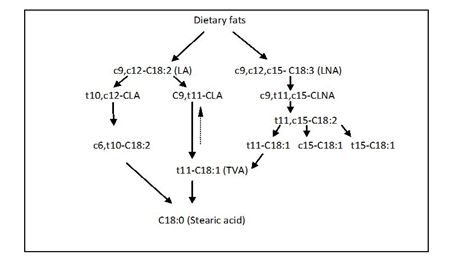
Fig. 1. Biohydrogenation process of linoleic and linolenic fatty acids in the rumen (Harfoot & Hazlewood, 1988).
During biohydrogenation, isomerisation of double bonds and addition of hydrogen occurs, thereby making the rumen the main factor responsible for variation in fatty acid composition in products derived from ruminants (Givens et al., 2006). Biohydrogenation of fatty acids occurs mainly from linoleic and linolenic acids, as these compounds are predominant in ruminant diets (Bauman et al., 2000). The production of conjugated linoleic acid (CLA) in these animals results from the partial biohydrogenation of linoleic acid (C18:2 cis-9, cis-12). Initially (Figure 1), after lipolysis, free fatty acids undergo an isomerization process at the cis-12 double bond, forming CLA C18:2 cis-9, trans-11. Subsequently, the cis bond is reduced, leading to the formation of vaccenic acid (C18:1 trans-11). The final stage of biohydrogenation consists of the conversion of vaccenic acid into stearic acid (C18:0) through another reduction step. This mechanism plays an essential role in neutralising the adverse effects of lipids by promoting the degradation of esterified lipids and the subsequent hydrogenation of free fatty acids (Harfoot & Hazlewood, 1988; Jenkins, 1993).
The high energy density of fat makes it an efficient option for enhancing productivity in ruminants, either by increasing milk production in dairy cows (Dias, 2009) or by promoting weight gain in beef cattle (Wardiman et al., 2024). However, the uncontrolled addition of unprotected fat sources may have negative effects, such as reduced dry matter intake (Ortiz, 2011), as well as impacts on the qualitative and quantitative characteristics of the carcass (Barducci, 2016) and the final quality of the meat (Alba et al., 2021). In a study evaluating fat supplementation (Megalac type) in diets for ewes during the final third of gestation, Santos et al. (2017) observed no significant differences in body condition score at lambing between treatments with or without the addition of protected fat, although supplementation contributed to maintaining the ewes body weight up to 60 days postpartum.
Ruminants possess a highly complex microbial ecosystem that is essential for the efficient digestion of fibrous feeds. However, excessive fat in the diet can impair the health of this ecosystem, compromise fibre degradation (Palmquist & Mattos, 2006) and increase the likelihood of digestive disorders. To ensure a more effective and safer utilisation, fat should be supplied in a protected form, which has proven beneficial for animals in feedlot systems facing high energy demands (Nascimento, 2017). According to Neumann et al. (2015), protected fat is relatively inert under rumen conditions, acting only at the pH of the abomasum. This allows for a high energy density without impairing fibre utilisation in the diet. When incorporated into the diet, a high intake of unsaturated fatty acids (UFAs) may exceed the ability of rumen microorganisms to carry out biohydrogenation, allowing desirable fatty acids to bypass the rumen intact and to be absorbed in the intestine (Sousa, 2022). These fatty acids are then incorporated into the animal’s muscle tissue, contributing to improvements in the quality of final products. This process enriches the final product with important lipids, whether meat (Parente et al., 2020; Alba et al., 2021; Costa et al., 2018; Lima et al., 2018; Bagaldo et al., 2019) or milk (Parente et al., 2018).
Vegetable oils, such as those derived from soybean (Tsiplakou et al., 2013), flaxseed (Besharati, 2022), and protected sunflower and corn (Nascimento, 2020), have been incorporated into ruminant diets with the aim of increasing the levels of unsaturated fatty acids (UFAs) in foods intended for human consumption. While traditional lipid supplementation has been extensively reviewed, the last decade (2014-2024) has seen a technological shift towards sophisticated encapsulation methods, such as biopolymer coating and nanotechnology. Therefore, this systematic review is necessary to consolidate recent conflicting data regarding these advanced protection methods. The primary objective of this review was to compile and discuss relevant findings on the use of protected fat in ruminant nutrition, with an emphasis on weight gain, digestive health, feed efficiency, and meat quality.
2.0 Materials and methods
This systematic review was conducted utilising a structured search strategy to capture recent advancements in the field. The literature search was restricted to a 10-year window (from January 2014 to December 2024) to capture the most recent decade of technological advancements in lipid protection methods, such as polymer encapsulation and nanotechnology, which differ fundamentally from older, traditional calcium soap formulations.
2.1 Search strategy and keyword optimisation
A systematic search was performed across the Web of Science, Scopus, and PubMed databases. To maximize retrieval efficiency and avoid overly restrictive filtering, the search was applied to the “Title, Abstract, and Keywords” fields using the following optimized Boolean string:
(“protected fat” OR “rumen-protected” OR “calcium salts of fatty acids” OR “encapsulated lipid”) AND (ruminant* OR sheep OR cattle OR goat) AND (digestibility OR intake OR performance OR “meat quality”).
2.2 Inclusion and exclusion criteria
Studies were eligible for inclusion if they met the following strict criteria: (1) peer-reviewed experimental trials published in English; (2) conducted with ruminants (cattle, sheep, or goats); (3) evaluated quantified inclusion levels and specific sources of rumen-protected fats; and (4) measured at least two primary outcomes of interest (dry matter intake, nutrient digestibility, growth performance, or carcass/meat traits).
Exclusion criteria consisted of: (1) review articles, meta-analyses, and conference abstracts; (2) studies using exclusively unprotected lipid sources; (3) trials focusing solely on dairy parameters without meat or growth data; and (4) studies where exact fat inclusion levels or protection methods were not disclosed.
2.3 Data extraction and rationale for systematic synthesis
Figure 2 presents a flowchart of the structured literature search, screening and selection process that resulted in the final inclusion of seven (n = 7) studies.
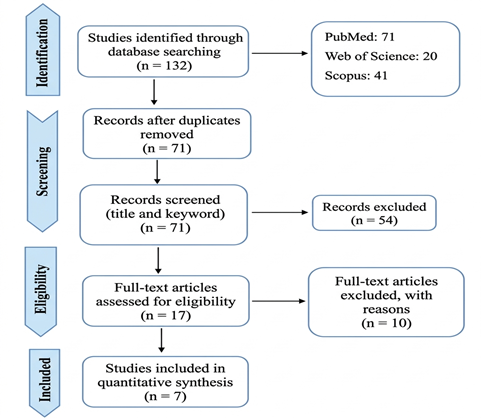
Fig. 2. Flowchart of the structured literature search and selection process for narrative synthesis
For each selected study, data were independently extracted regarding: animal species, physiological status, basal diet composition (roughage-to-concentrate ratio), protected fat source, fatty acid profile, inclusion level, and multi-nutrient digestibility (dry matter, organic matter, and fiber fractions).
A formal statistical meta-analysis was not conducted due to the extreme methodological heterogeneity among the selected studies. This included differences in animal species (bovine vs. ovine vs. caprine), diverse physiological stages, conflicting experimental designs (in vivo vs. in vitro fermentation), and highly variable lipid protection technologies, which would compromise the statistical validity and biological relevance of a pooled effect size.
A formal risk-of-bias assessment was not performed because the limited number of eligible studies and their substantial methodological heterogeneity would have restricted the applicability and interpretability of standardized assessment tools such as SYRCLE or Cochrane-based frameworks. Instead, methodological rigor was addressed through strict eligibility criteria, detailed data extraction, and critical qualitative comparison of study designs, protected fat sources, inclusion levels, and measured outcomes.
2.4 Correlation analysis
To further explore the relationships among animal performance and digestive variables reported in the selected studies, a Pearson correlation analysis was conducted using extracted values of Dry Matter Intake (DMI), Dry Matter Digestibility (DMD), and Daily Weight Gain (DWG). Data points were compiled from treatment means reported in the included studies whenever these variables were simultaneously available. Correlation coefficients (r) were calculated to assess the strength and direction of linear associations among variables. The resulting correlation matrix was visualized using a heatmap to facilitate the interpretation of relationships between intake, digestibility, and growth performance. Given the limited number of studies and the heterogeneity of experimental conditions, the analysis was intended as an exploratory tool to identify potential biological patterns rather than to establish causal relationships. Because the correlation analysis was based on aggregated treatment means extracted from independent studies, the results should be interpreted with caution and considered descriptive rather than inferential.
3.0 Results
Seven articles were selected for the review, as described in Table 1, and organised according to the first author, year of publication, type of protected fat used in the experimental diets, evaluated parameters relevant to the study, and scientific journals. The studies were published in different journals, namely: Veterinary World (1 article), Ciências Agrárias (1 article), Animals (2 articles), Asian-Australasian Journal of Animal Science (1 article), Tropical Animal Health and Production (1 article), and Journal of Animal Science (1 article).
The review search identified a clear divergence in animal responses depending on the chemical nature of the protected fat source and its inclusion level. Low to moderate inclusion levels (ranging from 2.5% to 7% of dietary dry matter (DM)) generally maintained or enhanced baseline growth parameters ; however, they initiated a progressive shift in digesta transit dynamics, balacing high dry matter intake (DMI) against a gradual decline in total tract dry matter digestibility (DMD) across cattle, sheep, and goats trials. In contrast, when lipid supplementation exceeded 10% of DM, or when unprotected free vegetable oils were evaluated as comparative treatments, a consistent and significant reduction in both intake and nutrient digestibility was observed (Table 2).
Regarding dietary energy density, treatments targeting higher metabolizable energy concentrations through calcium salts of fatty acids evidenced a linear decline in non-fibrous and total carbohydrate digestibility. However, this digestive depression did not directly impair growth performance, as daily weight gains remained stable or followed a quadratic response. Advanced encapsulation technologies, particularly the use of biopolymers like calcium alginate nanocapsules at high concentrations, successfully prevented the typical drop in dry matter disappearance and gas production associated with free polyunsaturated fatty acids (PUFAs), whereas chitosan encapsulation conversely depressed nutrient digestibility. Finally, the interaction between protected lipid sources and cellular protectants, such as choline chloride, promoted a synergistic effect that significantly boosted average daily gain and altered lipid deposition patterns.
Table 1. Methodological characteristics and dietary details of the studies included in the systematic review
| Study ID | Author / Year | Animal Species & Physiological Status | Basal Diet (Roughage:Concentrate) | Protected Fat Source & Protection Method | Main Parameters Evaluated |
|---|---|---|---|---|---|
| 1 | Widiyanto et al. (2023) | Fine-wool ewes (Maintenance) | 40:60 (Native grass + concentrate) | Kapok seed oil (Rumen-protected via microencapsulation) | Performance, lipid status, serum metabolites |
| 2 | Santos et al. (2015) | ½ Boer × ½ Saanen crossbred kids (Growing) | 40:60 (Dehydrated alfalfa + concentrate) | Lactoplus® (Calcium salts of fatty acids) | Intake, multi-nutrient digestibility, growth performance |
| 3 | Behan et al. (2019) | Dorper sheep (Growing) | 30:70 (Guinea grass + concentrate) | Lecithin-coated granulated fat vs. Calcium soap | Rumen ecology, total tract nutrient digestibility |
| 4 | Besharati et al. (2022) | In vitro fermentation model (Dairy/Beef context) | 50:50 (Alfalfa hay/corn silage + concentrate) | Flaxseed/Linseed oil encapsulated with Chitosan or Calcium Alginate | Gas production, in vitro digestibility, biohydrogenation |
| 5 | Fiorentini et al. (2015) | Nellore steers (Finishing / Feedlot) | 30:70 (Corn silage + concentrate) | Lactoplus® (Calcium salts) vs. free vegetable oils | Intake, ruminal fermentation, duodenal FA flow |
| 6 | Freiria et al. (2022) (p. 8) | Nellore beef cattle (Grazing / Supplemented) | Pasture-based (Tropical forage + supplement) | Rumen-protected soybean oil vs. Palm oil | Pasture intake, total tract nutrient digestibility |
| 7 | Nascimento et al. (2020) | Nellore bulls (Finishing / Feedlot) | 20:80 (Sugarcane bagasse + concentrate) | Calcium salts of palm, soybean, and cottonseed fatty acids | Animal performance, carcass traits, meat quality |
Table 2. Standardised animal performance, dry matter intake (DMI), and dry matter digestibility (DMD) across
selected lipid supplementation trials in small and large ruminants.
| Author / Year | Treatment / Protected Fat Source | Inclusion Level (% DM) | Study Type / Species | DMI (g/day or kg/day)* | DMD (%) | Daily Weight Gain (g/day) |
|---|---|---|---|---|---|---|
| Widiyanto et al. (2023) | K0C0 (Control) | 0% | Sheep | 385.4 g/d | 68.3% | 43.9 g/d |
| K1C2 (Protected Kapok Oil + Choline) | 10% Oil + 3% CC | Sheep | 448.0 g/d | 65.5% | 58.3 g/d | |
| Santos et al. (2015) | Lactoplus® Low Energy | 2.5% | Goat | 888.0 g/d | 65.8% | 185.0 g/d |
| Lactoplus® High Energy | 2.8% | Goat | 866.0 g/d | 64.0% | 173.0 g/d | |
| Behan et al. (2019) | Basal Diet (Control) | 0% | Sheep | 896.8 g/d | 76.8% | 117.3 g/d |
| Lecithin-coated Granulated Fat | Commercial dose | Sheep | 903.8 g/d | 76.2% | 120.3 g/d | |
| Besharati et al. (2022) | Control (No Oil) | 0% | In Vitro | – | 61.1% | – |
| Linseed Oil (Unprotected) | 14% | In Vitro | – | 53.7% | – | |
| Flaxseed Oil (Calcium Alginate Nano) | 14% | In Vitro | – | 75.0% | – | |
| Fiorentini et al. (2015) | Control (No Fat) | 0% | Cattle | 4.50 kg/d | 73.0% | – |
| Lactoplus® (Protected Fat) | Commercial dose | Cattle | 4.26 kg/d | 75.0% | – | |
| Unprotected Palm Oil | High dose | Cattle | 2.43 kg/d | 65.0% | – | |
| Freiria et al. (2022) | Control Supplement (No Fat) | 0% | Cattle | 9.44 kg/d | 51.2% | – |
| Protected Soybean Oil | 3.4% DM | Cattle | 9.34 kg/d | 49.0% | – |
K0 and K1 = supplementation with protected kapok seed oil at 0 and 10%, respectively; C0, C1, and C2 = levels of choline chloride supplementation, corresponding to 0, 1.5, and 3% on a dry matter basis, respectively; DMI: Dry Matter Intake; DMD: Dry Matter Digestibility; DWG: Daily Weight Gain
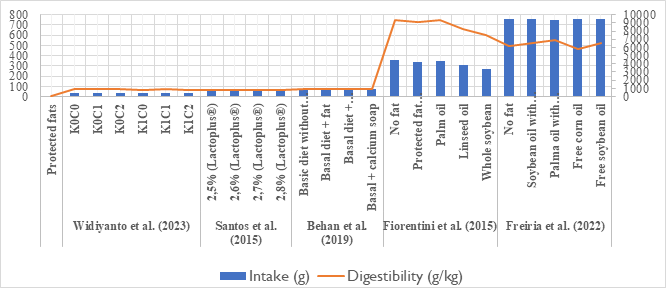
Fig. 3. Relation between dry matter intake and digestibility (DMI vs. DMD) of ruminants fed different sources of protected fat.
Pearson correlation analysis (Figure 4) revealed that Daily Weight Gain was strongly and positively correlated with DMI (r=0.86), but had a negligible relationship with DMD (r=-0.13). Conversely, a strong negative correlation occurred between DMI and DMD (r=-0.71), demonstrating that higher feed intake significantly reduces dry matter digestibility
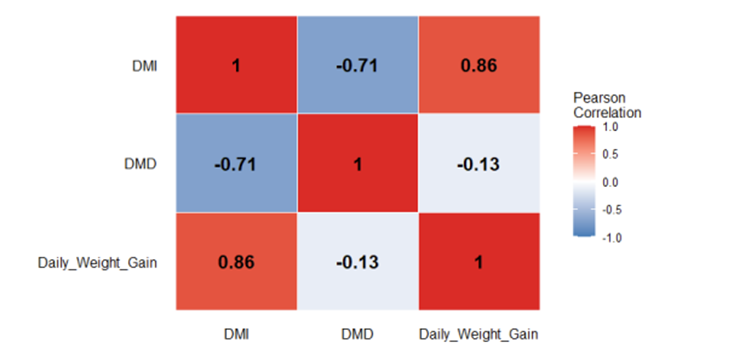
Fig. 4. Correlation matrix heatmap among Dry Matter Intake (DMI), Dry Matter Digestibility (DMI), and Daily Weight Gain.
4.0 Discussion
4.1. Effects of lipid protection technologies on intake and multi-nutrient digestibility
The distinct biological trade-off between DMI and DMD observed across treatments in the published literature underscores how rising consumption levels naturally accelerate digesta passage rates, even when using highly inert, modern rumen-protection methods under typical ruminal pH conditions. As demonstrated by Santos et al. (2015) with growing goats and Freiria et al. (2022) with grazing beef cattle, traditional calcium salts of fatty acids (CSFA) and protected vegetable oils remain intact in the rumen, bypassing microbial fermentation to be selectively hydrolyzed later by gastric juices in the highly acidic environment of the abomasum. This protective mechanism prevents the physical coating of fibrous feed particles, which otherwise inhibits cellulolytic microbial attachment and limits chemical digestion. However, when fat inclusion thresholds exceed specific limits, the protective capacity of these technologies can be compromised. Fiorentini et al. (2015) reported that excessive lipid loads often lead to a high concentration of free, unassociated fatty acids in the rumen fluid, triggering direct amphiphilic toxic effects on the cell membranes of fibrolytic bacteria. The reduction in DMI observed at high energy densities or with unprotected palm oils is primarily a feedback mechanism driven by cholecystokinin secretion and reduced ruminal passage rates, which are directly caused by compromised fiber degradation efficiency. Furthermore, the contrasting results observed by Besharati et al. (2022) highlight the importance of material selection; while calcium alginate nanocapsules create a stable barrier that optimizes nutrient disappearance and in vitro gas production, chitosan encapsulation conversely exerts strong intrinsic antimicrobial properties that non-selectively depress ruminal microbial activity, thereby reducing overall dry matter digestibility.
4.2. Rumen biohydrogenation pathways and lipid matrix interactions
Rumen microorganisms utilize the biohydrogenation pathway as a vital defense mechanism to neutralize the toxic effects of dietary unsaturated fatty acids. Free linoleic acid normally undergoes rapid isomerization and sequential reduction steps, transforming into conjugated linoleic acid (CLA), vaccenic acid, and ultimately into fully saturated stearic acid. Fiorentini et al. (2015) and Besharati et al. (2022) both emphasized that when vegetable oils rich in polyunsaturated fatty acids (PUFAs) are supplied without proper protection, up to 95% of these health-beneficial fatty acids are hydrogenated into saturated configurations by the ruminal microbiota. Effective ruminal protection techniques structurally shield the double bonds of PUFAs from microbial isomerases. By bypassing the ruminal biohydrogenation process, these intact unsaturated complexes reach the duodenum. As observed in the metabolic and ruminal ecology assessments of Behan et al. (2019) and Fiorentini et al. (2015), protecting the lipid core (whether through lecithin coating or calcium salts) ensures that intact unsaturated fatty acids reach the post-ruminal tract. Here, they are incorporated into micellar structures, absorbed across the intestinal epithelium, and directly transported via chylomembranes to peripheral tissues, effectively shifting the animal’s systemic fatty acid profile.
4.3. Tissue incorporation and impacts on meat quality traits
The successful bypass of protected fats directly dictates the lipid architecture of ruminant muscle tissue. Supplementation with protected vegetable oils or CSFA consistently elevates the concentrations of linoleic and oleic acids in the muscle. This fatty acid shift is critical; increasing the concentration of oleic acid via metabolic elongation and desaturation mediated by the stearoyl-CoA desaturase enzyme is highly correlated with enhanced meat palatability and richer flavor profiles.
Crucially, the utilization of protected fats avoids the adverse carcass effects often linked to high-lipid diets. As demonstrated by Nascimento et al. (2020) in finishing Nellore bulls, because the ruminal environment remains stable, voluntary energy intake is maintained, providing additional acetyl-CoA subunits for adipose tissue deposition. This pathway improves carcass subcutaneous finishing scores and elevates ether extract concentrations without modifying undesirable meat sensory traits, such as cooking loss, shear force, or subjective muscle coloration. Moreover, the innovative approach by Widiyanto et al. (2023) combining protected polyunsaturated kapok seed oil with lipotropic factors (choline chloride) demonstrates that cellular protectants can modulate hepatic lipid metabolism, successfully reducing total intramuscular cholesterol while preferentially depositing premium omega-6 fatty acids into the commercial meat cuts.
4.4. Correlations between intake volume, passage rate and tissue deposition
The strong positive correlation (r = 0.86) proves that total nutrient volume is the most critical factor for growth. Eating more feed ensures the animal surpasses its maintenance requirements to deposit body tissue, aligned with the bioenergetic principles of Mertens (1987), where net energy intake dictates productive responses. However, the strong negative correlation (r = -0.71) is driven by digestive transit time. When an animal eats more, feed moves through the rumen and intestines faster. As modelized by Seo et al. (2006), this accelerated passage rate leaves less time for microbial fermentation and enzymatic breakdown, consequently lowering overall dry matter digestibility (DMD). The weak correlation between DMD and DWG (r = -0.13) reveals that the absolute quantity of food consumed completely overrides the slight drop in digestive efficiency. This physiological phenomenon is corroborated by Galyean and Defoor (2003), who demonstrated that animals gaining the most weight eat the most, as total daily energy intake plays a significantly greater role in tissue deposition than minor variations in dietary digestibility.
5. Conclusion
The findings of this study demonstrate that the use of rumen-protected fat may improve animal performance depending on fat source, inclusion level, protection technology, and animal category by driving high net energy and dry matter intake. Crucially, our correlation analysis resolves a key physiological dynamic: while increased intake accelerates passage rate and significantly reduces dry matter digestibility (r=-0.71), the absolute volume of consumed nutrients completely overrides this minor drop in digestive efficiency to dictate positive growth responses (DWG; r=0.86). Despite these clear bioenergetic advantages, research regarding these intake-digestibility trade-offs remains limited in specific contexts. The small number of eligible studies limits the generalizability of the findings and highlights the need for additional controlled trials. However, these results highlight opportunities to investigate less-studied, locally adapted ruminant breeds in tropical and semi-arid regions, expanding the application of lipid technologies in global livestock production.
Author Contributions
Conceptualisation: Sonel Gilles; Methodology: Sonel Gilles, José MP Filho, Leilson R Bezerra, Lucas de Souza Barros; Literature search and data collection: Sonel Gilles, Bernadin Fonrose, Immanuel I Madziga, Fedner Cadeau; Study selection and data curation: Sonel Gilles, Bernadin Fonrose, Immanuel I Madziga, Fedner Cadeau; Formal analysis and synthesis of results: Sonel Gilles, José MP Filho, Lucas de Souza Barros; Writing – Original draft preparation: Sonel Gilles; Writing – Review and editing: Fedner Cadeau, Rafael H T B Góes; Supervision: José MP Filho, Leilson R Bezerra. All authors have read and agreed to the published version of the manuscript.
Funding: This review received no external funding.
Ethics Approval Statement: Not applicable. This study is a systematic review based on previously published data and does not involve direct experimentation with animals.
Informed Consent Statement: Not applicable.
Data Availability Statement: The meta-analysis data that support the findings of this study were derived from published articles and are available from the corresponding author upon reasonable request.
Acknowledgments: The authors express their gratitude to the researchers and institutions whose published studies contributed to this systematic review on rumen-protected fat and its effects on animal performance, nutrient digestibility, and meat quality.
Conflicts of Interest: The authors declare no conflicts of interest.
Artificial Intelligence: AI was not used in this review.
References
Alba HDR, Freitas Júnior JE, Leite LC, Azevêdo JAG, Santos SA, Pina DS, Cirne LGA, Rodrigues CS, Silva WP, Lima VGO, Tosto MSL, Carvalho GGP. 2021. Protected or unprotected fat addition for feedlot lambs: feeding behavior, carcass traits, and meat quality. Animals, (11), 328. https://doi.org/10.3390/ani11020328
Bagaldo AR, Miranda GS, Júnior MS, Araújo FL, Matoso RVM, Chizzotti ML, Bezerra LR, Oliveira RL. 2019. Effect of licuri cake supplementation on performance, digestibility, ingestive behavior, carcass traits and meat quality of grazing lambs. Small Ruminant Research, 177, 18-24. https://doi.org/10.1016/j.smallrumres.2019.05.020
Barducci RS, Franzoi MCS, Sarti LMN, Millen DD, Putarov TC, Perdigão A, Martins CL, Arrigoni MDB. 2016. Fatty acid profile and meat characteristics of Nellore cattle fed protected lipid sources. Arquivo Brasileiro de Medicina Veterinária e Zootecnia, 68(1). https://doi.org/10.1590/S1806-92902016000400004
Bauman DE, Barbano DM, Dwyer DA, Griinari JM. 2000. Production of butter with enhanced conjugated linoleic acids for biomedical studies. Journal of Dairy Science, 83(11), 2422-2425. https://doi.org/10.3168/jds.S0022-0302(00)75131-9
Behan AA, Loh TC, Fakurazi S, Kaka U, Kaka A, Samsudin AA. 2019. Effects of supplementation of rumen protected fats on rumen ecology and nutrient digestibility in sheep. Animals, 9(7), 400. https://doi.org/10.3390/ani9070400
Besharati M, Giannenas I, Palangi V, Ayasan T, Noorian F, Maggiolino A, Lorenzo JM. 2022. Chitosan/calcium-alginate encapsulated flaxseed oil in dairy cattle diet: in vitro fermentation and fatty acid biohydrogenation. Animals, 12(11), 1400. https://doi.org/10.3390/ani12111400
Caetano GAO, Fonseca AA, Figueiredo, CB. 2020. Lipid content and composition as a management tool for cattle nutrition. Research, Society and Development, 9(7), e334974037. https://doi.org/10.33448/rsd-v9i7.4037
Costa JB, Oliveira RL, Silva TM, Barbosa AM, Borja MS, Pellegrini CB, Bezerra LR. 2018. Fatty acid composition and sensory attributes of lamb meat fed diets containing licuri cake. PLoS ONE, 13(11), e0206863. https://doi.org/10.1371/journal.pone.0206863
Dias JC, Martins JAM, Emerick LL, Souza FA, Andrade VJ. 2009. Effects of lipid supplementation on reproductive efficiency of cattle. Revista Brasileira de Reprodução Animal, 33(2), 95-104. http://www.cbra.org.br/
Fiorentini G, Carvalho IPC, Messana JD, Canesin RC, Castagnino PS, Lage JF, Arcuri PB, Berchielli TT. 2015. Effect of lipid sources on intake, digestion and ruminal fermentation of Nellore steers. Asian-Australasian Journal of Animal Sciences, 28(11), 1583-1591. https://doi.org/10.5713/ajas.15.0130
Freiria LB, Zervoudakis JT, Paula NF, Fonseca MA, Silva PIJLR, Silva YRVB, Possamai AJ. 2022. Different sources of fat in supplements for grazing beef cattle. Tropical Animal Health and Production, 54(3), 163. https://doi.org/10.1007/s11250-022-03169-9
Galyean ML, Defoor PJ. 2002. Effects of roughage source and level on intake by feedlot cattle. Journal of Animal Science, 81(Suppl. 1), 14. https://www.researchgate.net/publication/255638002_Effects_of_roughage_source_and_level_on_intake_by_feedlot_cattle1
Givens DI, Kliem KE, Gibbs RA. 2006. The role of meat as a source of n3 polyunsaturated fatty acids in the human diet. Meat Science, 74(1), 209-218. https://doi.org/10.1016/j.meatsci.2006.04.008
Harfoot CG, Hazlewood GP. 1988. Lipid metabolism in the rumen. In: Hobson PN (Ed.), The rumen microbial ecosystem. Elsevier Applied Science. https://doi.org/10.1017/S0021859600071082
Jenkins TC. 1993. Lipid metabolism in the rumen. Journal of Dairy Science, 76(12), 3851-3863. https://doi.org/10.3168/jds.S0022-0302(93)77727-9
Lima AGVO, Oliveira RL, Silva TM, Barbosa AM, Nascimento TVC, Silva Oliveira V, Bezerra LR. 2018. Feeding sunflower cake to lambs: physicochemical composition and acid profile of meat. PLoS ONE, 13(1), e0188648. .https://doi.org/10.1371/journal.pone.0188648
Machado NAF. 2018. Ruminal biohydrogenation and fatty acid digestion in sheep fed babassu or buriti oil. Masters Thesis, Universidade Federal do Maranhão, São Luís, Brazil. https://sucupira.capes.gov.br/sucupira/public/consultas/coleta/trabalhoConclusao/viewTrabalhoConclusao.jsf?id_trabalho=5921766
Mertens DR. 1987. Predicting intake and digestibility using mathematical models of ruminal function. Journal of Animal Science, 64(5), 1548-1558. https://doi.org/10.2527/jas1987.6451548x
Nascimento FA, Silva NC, Prados LF, Pacheco RDL, Johnson BJ, Cappellozza BI, Resende FD, Siqueira GR. 2020. Calcium salts of fatty acids with varying fatty acid profiles in diets of feedlot-finished Bos indicus bulls: impacts on intake, digestibility, performance, and carcass and meat characteristics. Journal of Animal Science, 98(12). https://doi.org/10.1093/jas/skaa382
Nascimento BZ, Costa APO. 2020. Hydroxylation of vegetable oils and chemical characterization. Matéria (Rio de Janeiro), 25(3). https://doi.org/10.1590/S1517-707620200003.1087
Nascimento FA. 2017. Protected fat with different fatty acid profiles in feedlot Nellore cattle. Masters Thesis, Universidade Estadual Paulista, Brazil. https://repositorio.unesp.br/server/api/core/bitstreams/2cb2c18e-6f12-4e38-b321-f146d7f74e73/content
Nelson ML, Marks DJ, Busboom JR, Cronrath JD, Falen R. 2004. Effects of supplemental fat on growth performance and quality of beef from steers fed barley-potato product finishing diets: I. Feedlot performance, carcass traits, appearance, water binding, retail storage, and palatability attributes. Journal of Animal Science, 82(12), 3600-3610. https://doi.org/10.2527/2004.82123600x
Neumann M, Horst EH, Bonato DV, Junior JCH, Silva MRH, Mareze J. 2015. Milk production and quality in Jersey cows supplemented with protected fat. Agropecuária Científica no Semiárido, 11(2), 1-9. https://doi.org/10.30969/acsa.v11i1.564
Ortiz LFP. 2011. Increasing levels of protected fat in finishing lambs. Bachelors Degree Thesis, Universidade Federal da Grande Dourados, Brazil. http://repositorio.ufgd.edu.br/jspui/handle/prefix/712
Palmquist DL, Mattos WRS. 2006. Lipid metabolism. In:Berchielli TT, Pires AV, Oliveira SG (Eds.), Ruminant Nutrition, (pp. 287-310) FUNEP, Brazil. https://repositorio.usp.br/item/001561732
Palmquist DL, Mattos WRS. 2011. Metabolismo de lipídeos. In: Berchielli, T.T., Pires, A.V. and Oliveira, S.G. (eds.), Nutrição de ruminantes. Jaboticabal: FUNEP, pp.299-322. https://scholar.google.com/scholar_lookup?title=Metabolismo%20de%20lip%C3%ADdeos%20na%20alimenta%C3%A7%C3%A3o%20de%20ruminantes&publication_year=2011&author=D.L.%20Palmquist&author=W.R.S.%20Mattos
Parente MOM, Rocha KS, Bessa RJB, Parente HN, Zanine AM, Machado NAF, Lourenço Júnior JB, Bezerra LR, Landim AV, Alves SP. 2020. Effects of babassu and buriti oil on lamb performance and meat quality. Meat Science, 160, 107971. https://doi.org/10.1016/j.meatsci.2019.107971
Parente MOM, Susin I, Nolli CP, Ferreira EM, Gentil RS, Polizel DM, Pires AV, Alves SP, Bessa RJB. 2018. Vegetable oil supplementation in ewes and lamb growth. Journal of Animal Science, 96(1), 354-363. https://doi.org/10.1093/jas/skx015
Ribeiro RM, Pastori WT, Fagundes MHR, Prezotto LD, Gobesso AAO. 2009. Lipid sources in equine diets and nutrient digestibility. Revista Brasileira de Zootecnia, 38(10), 1989-1994. https://doi.org/10.1590/S1516-35982009001000019
Santos MP, Godoy MM, Souza CL, Moura Assis R, Sena CVB. 2017. Productive and reproductive performance of ewes fed protected fat. Pesquisa Agropecuária Brasileira, 52(7), 515-522. https://doi.org/10.1590/S0100-204X2017000700009
Santos SMA, Alcalde CR, Possamai APS, Molina BSL, Hygino B, Souza LC, Gomes LC, Ferrari IR. 2015. Digestibidade e desempenho produtivo em cabritos mestiços ½ Boer x ½ Saanen alimentados com dietas contendo gordura protegida. Semina: Ciências Agrárias, 36(5), 3315-3328. https://doi.org/10.5433/1679-0359.2015v36n5p3315 Science, 82(12), 3600-3610. https://doi.org/10.2527/2004.82123600x Science, New York, (pp. 285-322). https://doi.org/10.1016/0079-6832(78)90004-6
Seo S, Tedeschi LO, Lanzas C, Schwab CG, Fox DG. 2006. Development and evaluation of empirical equations to predict feed passage rate in cattle. Journal of Dairy Science, 89(10), 3958-3968. https://doi.org/10.1016/j.anifeedsci.2005.09.014
Sousa SV. 2022. Lipids in ruminant diets and meat quality. Veterinária e Zootecnia, 29, 1-12. https://doi.org/10.35172/rvz.2022.v29.692
Tsiplakou E, Zervas G. 2013. Fish and soybean oil in goat diets. Livestock Science, 155(2-3), 236-243. https://doi.org/10.1016/j.livsci.2013.05.020
Wardiman B, Natsir A, Syahrir S. 2024. Bibliometric analysis of protected fat supplementation research. International Journal of Information and Engineering Technology, 19(5), 1591-1602. https://doi.org/10.18280/ijdne.190513
Widiyanto W, Mulyono M, Prasetiyono BWHE. 2023. Protected kapok oil supplementation in sheep. Veterinary World, 16(7), 1520-1526. https://doi.org/10.14202/vetworld.2023.1520-1526
Disclaimer/Publisher’s Note: The statements, opinions, institutional affiliations, data contained in all publications, and all responsibilities for accuracy are solely those of the individual author(s) and contributor(s) and not of MARCIAS AUSTRALIA and AJAVAS/or the Editor(s). MARCIAS AUSTRALIA and AJAVAS/or the Editor(s) disclaim responsibility for any injury to people or property resulting from any ideas, methods, instructions or products referred to in the content.