
Periodic washing of fry tanks and salt application to ascertain growth and survival of Heterobranchus longifilis fry
Emem A Robert1* Ebenezer J Landu2
- Fish Breeding and Genetics, National Institute for Freshwater Fisheries Research, New Bussa, Niger State, Nigeria
- Fisheries Economics, National Institute for Freshwater Fisheries Research, New Bussa, Niger State, Nigeria
Article Information
- Date Received: 14/12/2025
- Date Revised: 29/12/2025
- Date Accepted: 30/12/2025
- Date Published Online: 31/12/2025
Copyright: © 2025 The Authors. Published by MARCIAS AUSTRALIA, 32 Champion Drive, Rosslea, Queensland, Australia. This is an open access publication under the terms and conditions of the Creative Commons Attribution (CC BY) license (https://creativecommons.org/licenses/by/4.0/).
Citation: Robert EA, Landu EJ (2025). Periodic washing of fry tanks and salt application to ascertain growth and survival of Heterobranchus longifilis fry. Aust J Agric Vet Anim Sci (AJAVAS), 1(2), 100008
https://doi.org/10.64902/ajavas.2025.100008
Abstract
Heterobranchus longifilis is a hardy fish species known for its ability to withstand stress in aquaculture, resistant to diseases, gives high yields, exhibits high fecundity and grows fast in cultured enclosures. For Clariid species to thrive in enclosures, periodic tank washing and salt application are mandatory. Low levels of salt used to wash fry tanks are reported to be beneficial for growth and survival of fish through minimising stress and eliminating ectoparasites. This study aimed to demonstrate that regular application of salt and tank washing improve hatchery output. Using a factorial experimental design, six thousand Heterobranchus longifilis fry were allocated to the following four treatments in triplicates: 1) Neither washing nor salting, 2) washing and salting only, 3) washing only, and 4) salting only. The experimental duration was thirty-five days. Twelve fry plastic tanks measuring 0.8 x 0.8 x 1.1m 2 were used. Stocking was five hundred fry per tank, each with an initial average body weight of 352 g. Results showed that final weights ranged from 409 to 516 g. Percentage survival rates were 80 in the washing and salting treatment, 71in the washing only treatment, 51in the salting only treatment and 45 in the neither washing nor salting treatment. Condition factor ranged from 1.1 to 1.5, an indication of fish wellness. Water quality parameters were within expected normal range. This study concludes that periodic washing and salt application significantly improve water quality, prevent diseases, minimise stress and support growth and survivability of fish in cultured enclosures.
Keywords
fry, salt application, periodic washing, plastic, Heterobranchus longifilis
Highlights
- Plastic rearing systems for Heterobranchus longifilis fry using the washing and salting only procedure, improved the survival rate of Heterobranchus longifilis fry to more than 80%;
- b-values of less than 3 in Heterobranchus longifilis fry indicate negative allometry in growth pattern, i.e. the fish grew more in length than in weight after the experimental duration;
- The best growth, survival rate and condition factor were observed in the washing and salting rearing system evidenced by a condition factor of 1.5
1.0 Introduction
The yearning for fish as food in the diets of consumers has heightened consumer interest in properly balanced nutrition options (Sobczak et al., 2022). Currently, fish farming has become the fastest-growing business in Nigeria, Africa’s second-biggest aquaculture producer (Ogunji and Wuertz, 2023). Aquaculture production involves raising fish from the fry to broodstock stage in enclosures with human intervention in the breeding and rearing process (Araujo et al., 2022). The species of catfish considered reliable for enclosed culture include: Heterobranchus longifilis, Clarias gariepinus, and Heterobranchus bidorsalis. They are important in hybridization advancements in the production of crossbreds like Clariabranchus, Heteroclarias, and Clariobranchus (Robert, 2023). The current growth trend in aquaculture can be sustained by seed production with high fertilisation, survivability rates and fastest growth (Torsabo et al., 2024). These three indicators are the deciding factors that the average fish farmer seeks to incorporate into breeding programmes. Adequate knowledge about culture enclosures is very valuable because fish farmers need information about aquaculture enclosures that promote faster fish growth and productivity (Borah et al., 2023). There are diverse aquaculture enclosures depending on breeding methods, farm practices, equipment, machinery, and modern integrated breeding systems, ranging from enclosures such as earthen ponds, concrete tanks, plastic tanks, to fiber glass tanks (Turlybek et al., 2025). They are collectively termed “artificial fish enclosures” and the culture system using such tanks are aptly called “artificial fish propagation” (Abdulraheem et al., 2020). Aquaculture challenges in Nigeria include losses of fry in production, lack of improved seeds, poor water quality, faulty marketing structure, high feed costs, insecurity and feeble aquaculture governance policies and implementation (Okon et al., 2025), hence the need for this investigation, to ensure optimal productivity and reduction in fish losses (Robert et al., 2024). Therefore, this study’s primary objective was to compare the survival and growth rate patterns of Heterobranchus longifilis fry in plastic enclosures using four rearing systems and procedures of periodic tank washing and tank salting, washing only and salting only.
2.0 Materials and methods
2.1.1 Water source
The Kigera Dam, of the National Institute for Freshwater Fisheries Research supplied water for this project.
2.1.2 Experimental fish
Heterobranchus longifilis fry numbering six thousand, were purchased from the hatchery unit of National Institute for Freshwater Fisheries Research New Bussa, Niger State of Nigeria.
2.1.3 Experimental site
Experimental site was the Fish Breeding and Culture Unit of NIFFR, New Bussa. New Bussa is located at 9°53′N 4°31′E coordinates (Robert et al., 2019).
2.2 Experimental procedure and design
2.2.1 Distribution of fry: Five hundred fry were randomly estimated and distributed into twelve plastic tanks. Treatments were triplicated. Treatment tanks were continuously aerated using aerators. Treatments were as follows:
Treatment WP0 – no washing nor salting procedure. These were the control fry tanks.
Treatment WP1 – the washing and salting only procedure.
Treatment WP2 – the washing procedure only.
Treatment WP3 – the salting procedure only.
Sampling activities involved common table salt application for which the quantity of 2g/litre was used. At every 7-day interval, the inner tanks and walls of the plastic were washed using soft foam. Fry were fed to satiation using a specially formulated NIFFR feed. A twice daily feeding regime at 9am and 6pm initially with 0.5mm NIFFR-formulated feed was implemented and later adjusted to 0.8mm after acclimatisation to the end of experiment. Fry were weighed with CAMRY 500 weighing balance. Feed waste in the plastic tanks was siphoned twice daily at 7am and 4pm. Water quality parameters were measured weekly on every sampling day.
2.2.2 Experimental design: The experimental design was a factorial design involving four treatments with three replicates, each.
2.3 Growth parameters: Growth and survival parameters were computed as follows:
% Survival = number of fingerling survivors at the end of study X 100 number of fry stocked at the beginning of the study (Mohammed et al., 2024).
Specific Growth Rate % day = logn final weight – logn initial weight X 100 Time (days) (Md. Hashibur et al.,2022).
Mean weight gain = Final weight (W2) – Initial weight of fish (W1) (Abdulraheem et al., 2020).
FCR= Total weight of dry feed offered / Total weight gain (Yang et al., 2025).
2.4 Physico-chemical parameters: Water quality parameters measured during this investigation were: pH, DO, Water temperature, Conductivity, TDS, Turbidity, Chlorides, Ammonia, Nitrates and Ammonium.
2.5 Data analyses
The data were statistically analysed using factorial analysis in SPSS version 20.0. while correlations procedures were used to evaluate length and weight relationships. Tukey’s pairwise probability test was used for mean separation at the p< 0.05 level of significance. PROC REG procedures were used for simple regression analysis for predicting growth patterns. The model used for the factorial analysis included the fixed effects of washing, salting, feeding regime, and washing nested within salting interval, while tank was used as a random effect.
3.0 Results
3.0 Results
3.1 Figures and tables
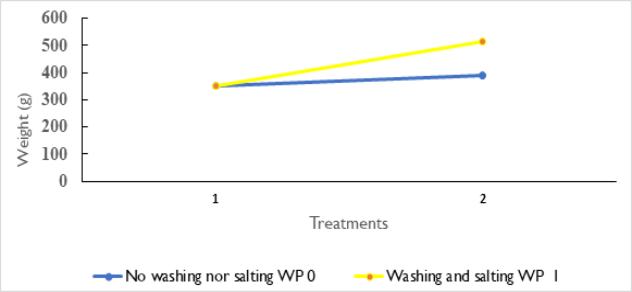
Figure 1 Growth response of Heterobranchus longifilis fry cultured in WP0 and WP1 treatments.
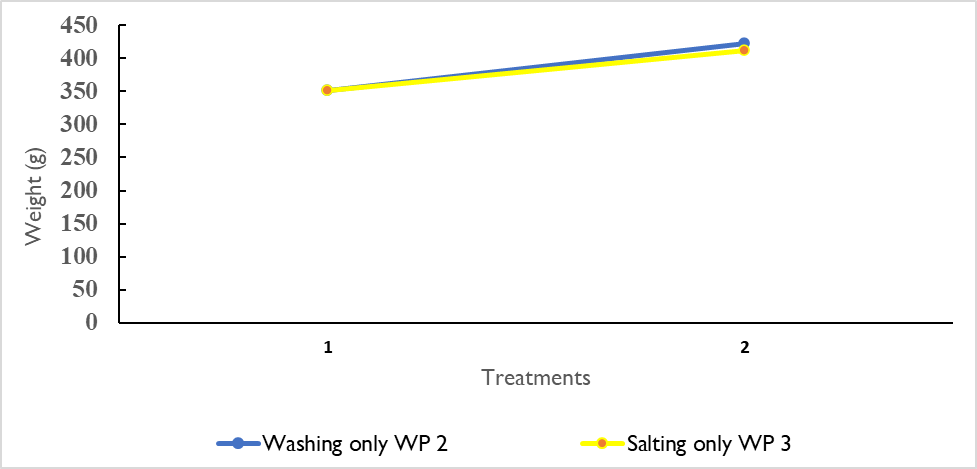
Figure 2. Growth response of Heterobranchus longifilis fry cultured in the WP2 and WP3 treatments.
WP0= no washing nor salting procedure. WP1= the washing and salting only procedure. WP2 = the washing procedure only. WP3 = the salting procedure only.
Table 1 Growth response of Heterobranchus longifilis fry in different treatments.
| Parameters | WP0 | WP1 | WP2 | WP3 |
|---|---|---|---|---|
| Initial weight (g) | 352 ± 0.00a | 352 ± 0.00a | 352 ± 0.00a | 352 ± 0.00a |
| Final weight (g) | 409 ± 0.00a | 515.68 ± 0.19b | 423 ± 0.01c | 412 ± 0.01d |
| Mean weight gain (g) | 57.0 ± 0.00a | 163.68 ± 0.63b | 71.0 ± 0.00c | 60.0 ± 0.00d |
| Specific growth rate (%) | 2.61 ± 0.01a | 2.71 ± 0.08b | 2.62 ± 0.03c | 2.61 ± 0.05a |
| Survival rate (%) | 45.0 ± 0.10a | 90.0 ± 0.93b | 71.0 ± 0.40c | 51.0 ± 0.01d |
| Condition factor (K) | 1.10 ± 0.00d | 1.50 ± 0.00a | 1.30 ± 0.00b | 1.22 ± 0.00c |
Means in the same column (for each section) with different superscripts are statistically different (p<0.05).
WP0= no washing nor salting procedure. WP1= the washing and salting only procedure. WP2 = the washing procedure only. WP3 = the salting procedure only.
Table 2. Mean cumulative mortality and survival rates for cultured Heterobranchus longifilis fry in different treatments under the study.
| Parameters | Mortality rate | % Cumulative mortality | Survival rate | % Cumulative survival |
|---|---|---|---|---|
| WP0 | 275 | 55 | 275 | 45 |
| WP1 | 100 | 20 | 400 | 80 |
| WP2 | 145 | 29 | 355 | 71 |
| WP3 | 245 | 49 | 255 | 51 |
WP0= no washing nor salting procedure. WP1= the washing and salting only procedure. WP2 = the washing procedure only. WP3 = the salting procedure only.
Table 3. Water quality parameters taken for cultured Heterobranchus longifilis fry in different treatments under the study.
| Parameters | WP0 | WP1 | WP2 | WP3 |
|---|---|---|---|---|
| Water temp (°C) | 29.0 ± 1.15a | 29.0 ± 0.00a | 29.0 ± 0.13a | 28.9 ± 0.00b |
| DO (mg/l) | 5.80 ± 0.00b | 5.90 ± 0.10a | 5.85 ± 0.23b | 5.90 ± 0.02a |
| pH | 7.35 ± 0.04a | 7.35 ± 0.20a | 7.35 ± 0.01a | 7.35 ± 0.19a |
| TDS (mg/l) | 24.0 ± 0.30a | 24.5 ± 0.00b | 24.5 ± 1.00b | 24.5 ± 0.45b |
| Conductivity (µS/cm) | 125.00 ± 0.00a | 125.00 ± 0.00a | 125.00 ± 0.00a | 125.00 ± 0.00a |
| Turbidity (NTU) | 5.35 ± 0.00a | 5.35 ± 0.00a | 5.35 ± 0.00a | 5.35 ± 0.00a |
| Chlorides (ppm) | 32.0 ± 11.20a | 32.0 ± 11.00a | 30.0 ± 11.00c | 31.0 ± 9.80b |
| Ammonia NH4 (mg/l) | 0.01 ± 0.00a | 0.01 ± 0.00a | 0.01 ± 0.00a | 0.01 ± 0.00a |
| Nitrate NO3 (mg/l) | 0.01 ± 0.00a | 0.01 ± 0.00a | 0.01 ± 0.00a | 0.01 ± 0.00a |
| Ammonium NH3 (mg/l) | 0.01 ± 0.00a | 0.01 ± 0.00a | 0.01 ± 0.00a | 0.01 ± 0.00a |
Means in the same column (for each section) with different superscript are statistically different (p<0.05).
WP0= no washing nor salting procedure. WP1= the washing and salting only procedure. WP2 = the washing procedure only. WP3 = the salting procedure only.
Table 4. Length-weight regression for cultured Heterobranchus longifilis fry in different treatments under the study.
| Treatments | Intercept (a) | Growth patterns (b) | Coefficient of determination (R²) |
|---|---|---|---|
| WP0 | 0.50 | 1.01 | 0.45 |
| WP1 | 0.75 | 1.78 | 0.72 |
| WP2 | 0.60 | 1.64 | 0.61 |
| WP3 | 0.55 | 1.50 | 0.51 |
WP0= no washing nor salting procedure. WP1= the washing and salting only procedure. WP2 = the washing procedure only. WP3 = the salting procedure only.
Observed trends and patterns in results
There was no significant difference (p>0.05) in the initial weight of Heterobranchus longifilis fry across all treatments at the commencement of the thirty-five-day experimental duration as portrayed in Figures 1 and 2. There were, however, significant differences (p<0.05) in final weights of Heterobranchus longifilis fry between all treatments (Table 1). Growth patterns of the fry in Table 1 also revealed a negative allometric growth in length more than in weight in all the treatments, indicative of an excellent state of wellness. As indicated in Table 2, survival significantly differed (p<0.05) across all treatments where the fry reared in plastic tanks using the washing and salting only procedure (WP1) fared the best at a cumulative survival rate of 80%, closely followed at 71% by the fry reared in the washing only treatment (WP2). Table 3 shows that most of the water quality parameters were within the expected normal ranges (Xu & Boyd, 2016) from commencement to the the end of the experiment without any significant differences (p>0.05) between treatments in water temperature, ρН, conductivity, turbidity ammonia, nitrate, and ammonium contents. However, there were significant differences (p<0.05) in dissolved oxygen, total dissolved solids and chloride between treatment groups (Table 3). Results of the length-weight regression analysis in Table 4 explained between 45 and 72% of the total observed variation in growth patterns of the fry in different treatments as indicated by the coefficient of determination, indicating a strong positive relationship between the two variables.
4.0 Discussion
The fact that there was no significant difference in the initial weights of Heterobranchus longifilis fry across all treatment groups at the commencement of the thirty-five-day experiment indicates that all fry were at the same experimental baseline for future comparison of weight changes with time without any bias. This conforms to international best practice standards of providing an unbiased commencing level playing field of similar initial weight between all treatment groups. The significant differences in final weights and survival rates between treatments in this study suggest that the regular application of salt and washing improve hatchery output and fish productivity in agreement with previous reports by Abdulraheem et al., (2020). The underlying biological mechanism behind this observation could be attributed to the chloride component of salt known to eradicate pathogenic bacteria (Awe et al., 2025). The observed negative allometric growth pattern in length more than in weight in all the treatments was indicative of an excellent state of wellness, which could possibly have been because of good adaptation to the rearing enclosure by the fry. In a study of length-weight relationships, condition factor and growth patterns of Clarias gariepinus and Oreochromis niloticus, Auta et al., (2025) reported a similar observation in growth patterns and b-values that were attributed to fish adaptation to the reservoir environment. Whilst most of the water quality parameters in this study were within the expected normal ranges (reference values for fish pond water quality parameters can be found in Xu & Boyd, 2016), the significant differences in dissolved oxygen, total dissolved solids and chloride between treatment groups could be attributed to the stocking density, because it has been previously reported that dissolved oxygen drops significantly in a densely stocked enclosure (Azhar et al., 2022). It could also be due to the feeding regime that leads to increased fish respiration and increased waste loads in the tanks (Zhang et al., 2023). The increase in total dissolved solids could be attributed to water management practices and organic matter deposits in the tanks (Nagaraju et al., 2022), while differences in chloride values between treatments WP2 and WP3 could possibly be because of the salt application treatment (Mathai et al., 2025) and dissolution of salts from the water source (Hong et al., 2023).
5.0 Conclusion
This study concludes that both tank washing and salt application ensure favourable growth conditions for fry. Further investigation to determine the optimal salinity levels in washed tanks for optimal growth in a wide variety of cultured fish species is needed. Future research into integrated management practices of tank cleaning using saline protocols alongside nutrient absorption for enhanced fish growth is apt and will be of immense interest to fish farmers.
Author Contributions: Conceptualisation: Emem A. Robert; Investigation and Methodology: Emem A. Robert, Ebenezer J. Landu; Project Administration: Emem A. Robert; Validation: Emem A. Robert, Ebenezer J. Landu; Writing – Original draft: Emem A. Robert; Writing – Review & Editing: Emem A. Robert, Ebenezer J. Landu.
Funding: This research received no external funding.
Ethics Approval Statement: All experiments were conducted in strict accordance with the ethical guidelines for fish research established by the National Institute for Freshwater Fisheries Research, New Bussa, Niger State, Nigeria. Care was taken to minimize stress and ensure the welfare of the animals throughout the study.
Informed Consent Statement: Not applicable.
Data Availability Statement: All the relevant data that support the findings of this study are available from the corresponding author upon reasonable request.
Acknowledgments: The authors would like to acknowledge the National Institute for Freshwater Fisheries Research, New Bussa, Niger State, Nigeria, for administrative and technical support, providing rearing tanks and providing computer resources, library and office space.
Conflicts of Interest: The authors declare no conflicts of interest.
Artificial Intelligence: AI was not used for this original research article.
References
Abdulraheem I, Idowu AA, Ojelade OC, Adeniyi BG. 2020. Growth performance and survival of Clarias gariepinus fry reared under periodic application of salt and washing of nursery tanks. Nigerian Journal of Fisheries. 17(1), 1892-1898. https://www.ajol.info/index.php/njf/article/view/265327
Auta T, Nasir I, Kankara UM, Yahaya MA, Sadauki MA, Bichi AH. 2025. Assessment of length-weight relationships, condition factor and growth patterns of Clarias gariepinus and Oreochromis niloticus in Sabke Reservoir, Nigeria. Federal University Dutsin-Ma Journal of Sciences, 9, 51-57. https://doi.org/10.33003/fjs-2025-09(AHBSI)-3387
Araujo GS, Alves da Silva, JW, Cotas, J, Pereira L. 2022. Fish farming techniques: Current situation and trends. Journal of Marine Science and Engineering, 10(11), 1598. https://doi.org/10.3390/jmse10111598
Awe FA, Omogunwa EA, Olanloye OA, Ogunbanwo OM. 2025. Use of salt as a disinfectant in the treatments of bacteria found in eggs of cultured Clarias gariepinus (Burchell, 1822). Global Journal of Fisheries Science, 7(1), 21-27. https://doi.org/10.31248/GJFS2024.067
Azhar MH, Pratama WK, Budi DS, Mukti AT, Santanumurti MB, Memis D. 2022.The effect of stocking density on growth performance and water quality of Silver Rasbora (Rasbora argyrotaenia) fry reared in plastic-lined pond. Egyptian Journal of Aquatic Biology and Fisheries, 26(5), 1165-1176. www.ejabf.journals.ekb.eg
Borah S, Das BK, Bhattacharjya BK, Karnatak G, Yadav AK, Pandit A, Parida PK, Roy A, Sahoo AK, Behera BK, Das AK, Rabha N, Priyadarshim P. 2024. Standardizing pen culture of small indigenous fish Labeo bata in the tropical floodplain wetland of the North Eastern Region, India: A step towards sustainable fisheries management. Sustainability, 15(5),4423. https://doi.org/10.3390/su15054423
Hong Y, Zhu Z, Liao W, Yan Z, Feng C, Xu D. 2023. Freshwater water quality criteria for chloride and guidance for the revision of the water quality standard in China. International Journal of Environmental Research and Public Health, 20(4), 2875. https://doi.org/10.3390/ijerph20042875
Md. Hashibur R, Haque MM, Alam MA, Flura. 2022. A study on the specific growth rate (SGR) at different stages of Tilapia Oreochromis niloticus production cycle in tank based aquaculture system. International Journal of Aquaculture and Fisheries Sciences, 8(2), 059-065. https://doi.org/10.17352/2455-8400-000079
Mathai RS, Arun AU, Syamkumar R. 2025. The potential impact of sodium chloride on the behaviour of Oreochromis niloticus. Agricultural Science Digest. https://arccjournals.com/journal/agricultural-science-digest/D-6435
Mohammed YS, Abdussalam I, Odedere AO, Logodi MM, Shehu AG. 2024. Growth response and nutrient utilization of Heterobranchus longifilis fingerlings reared in Hapa. International Journal of Fisheries and Aquatic Research, 9(2)14-18. https://www.fishjournals.com/assets/archives/2024/vol9issue2/9012-1729926045176.pdf
Nagaraju TV, Malegole SB, Chaudhary B, Ravindran G. 2022. Assessment of environmental impact of aquaculture ponds in the Western Delta Region of Andhra Pradesh. Sustainability, 14(20), 13035. https://doi.org/10.3390/su142013035
Ogunji J. Wuertz S. 2023. Aquaculture development in Nigeria: The second biggest aquaculture producer in Africa. Water, 15(24), 4224. https://doi.org/10.3390/w/5244224
Okon EM, Adesina BT, Falana BM, Ehigie JO, Bolanle AH, Okocha RC. 2025. Aquaculture research techniques in Nigeria: opportunities and challenges for sustainable aquaculture development. Scientific African, 29(2025), e02883. https://doi.org/10.1016/j.sciaf.2025.e02883
Robert EA, Yisa AT, Tsadu SM. 2019. Growth performance and survival of monosex cultured Heterobranchus longifilis juveniles in concrete flow-through and stagnant water systems. Scientific Research Journal, 7(2):43-65. https://doi.org/10.31364/SCIRJ/v7i2.2019.P0219615
Robert EA. 2023. Hybridization in catfishes Clarias gariepinus, Heterobranchus longifilis and Heterobranchus bidorsalis: A review. Proceedings of the 38th Annual National Conference of Fisheries Society of Nigeria, Niger Delta University, Yenogoa Campus, Bayelsa State, Nigeria, 13th November to 17th November, 2023. pp460 – 462. https://www.fison.org.ng/Documents/38th_Annual_Conference_of_FISON%20_Proceedings.pdf
Robert EA, Yisa AT, Tsadu SM, Olayimika SA. 2024. Fecundity studies on Clarias gariepinus and Heterobranchus longifilis parent stocks. Global Journal of Fisheries Science, 6(4). 112-118. https://doi.org/10.31248/gjfs2024.063
Sobczak M, Panicz R, Sadowski J, Polgesek M, Zochowska-Kujawska J. 2022. Does production of Clarais agriepinus x Heterobranchus longifilis hybrids influence quality attributes of fillets? Foods, 11(14), 2074. https://doi.org/10.3390/foods11142074
Torsabo D, Ishak SD, Noordin NM, Waiho K, Koh ICC, Yazed MA, Abol-Munagi AB. 2024. Optimizing reproductive performance in Pagasius catfish broodstock: A review of dietary and molecular strategies. Veterinary and Animal Science, 25(2024), 100375. https://doi.org/10.1016/j.vas2024.100375
Turlybek N, Nurbekova Z, Mukhamejanova A, Baimurzina B, Kulatayeva M, Aubakirova KM, Alikulov Z. 2025. Sustainable aquaculture systems and their impact on fish nutritional quality. Fishes, 10(5), 206. https://doi.org/10.3390/fishes10050206
Xu Z, Boyd CE. 2016. Reducing the monitoring parameters of fish pond water quality. Aquaculture, 465, 359-366. https://doi.org/10.1016/j.aquaculture.2016.09.031
Yang X, Zhu L, Jiang W, Yang Y, Gan M, Shen L, Zhu L. 2025. Machine learning-based prediction of feed conversion ratio: A feasibility study of using short-term FCR data for long-term feed conversion ratio (FCR) production. Animals, 15(12),1773. https://doi.org/10.3390/ani15121773
Zhang y, Yang X, Hu J, Qu X, Feng D, Gui F, Zhu F. 2023.Effect of inlet pipe design on self-cleaning ability of a circular tank in RAS. Frontiers in Marine Science, 10, 1120205. https://doi.org/10.3389/fmars.2023.1120205
Disclaimer/Publisher’s Note: The statements, opinions, institutional affiliations, data contained in all publications, and all responsibilities for accuracy are solely those of the individual author(s) and contributor(s) and not of MARCIAS AUSTRALIA and AJAVAS/or the Editor(s). MARCIAS AUSTRALIA and AJAVAS/or the Editor(s) disclaim responsibility for any injury to people or property resulting from any ideas, methods, instructions or products referred to in the content.